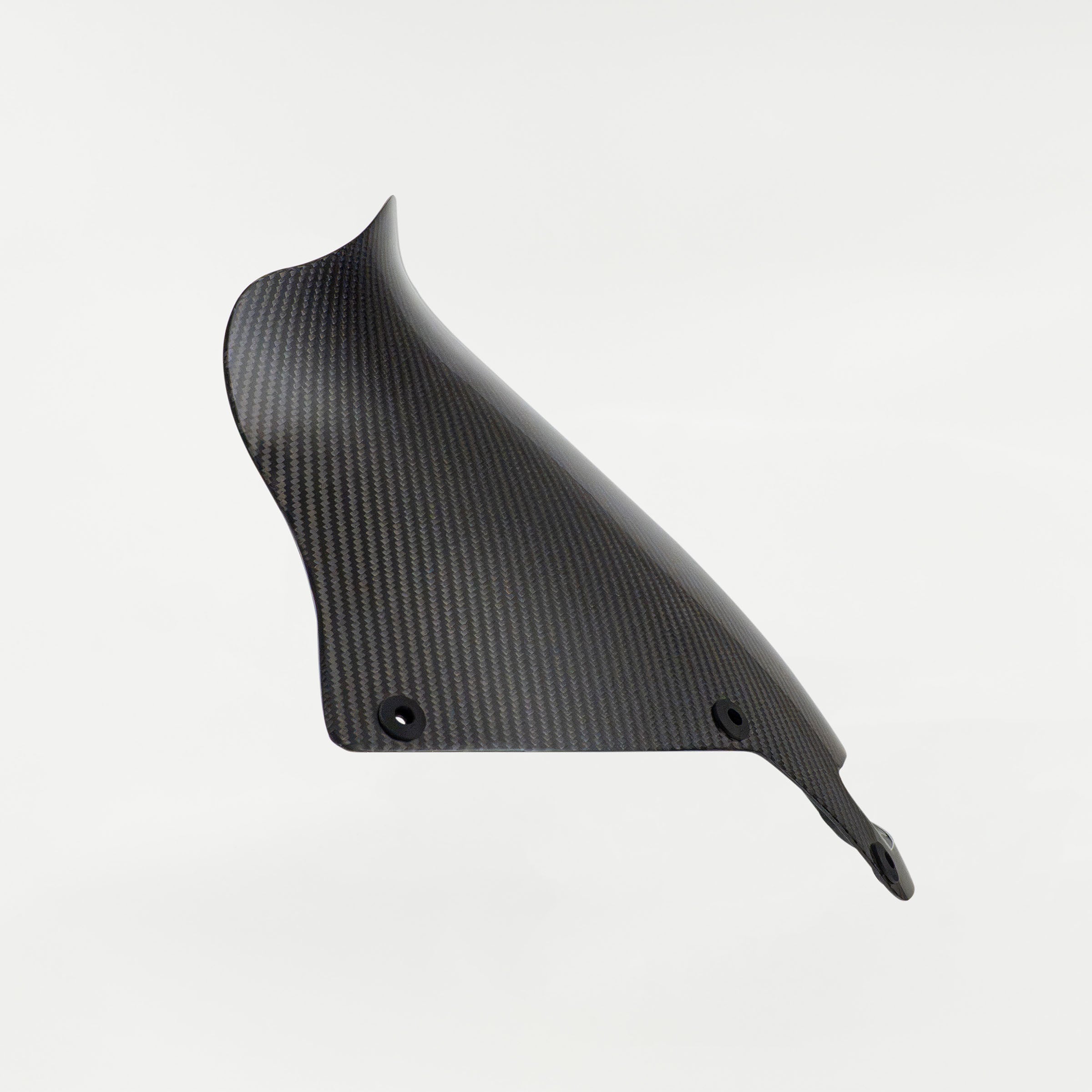
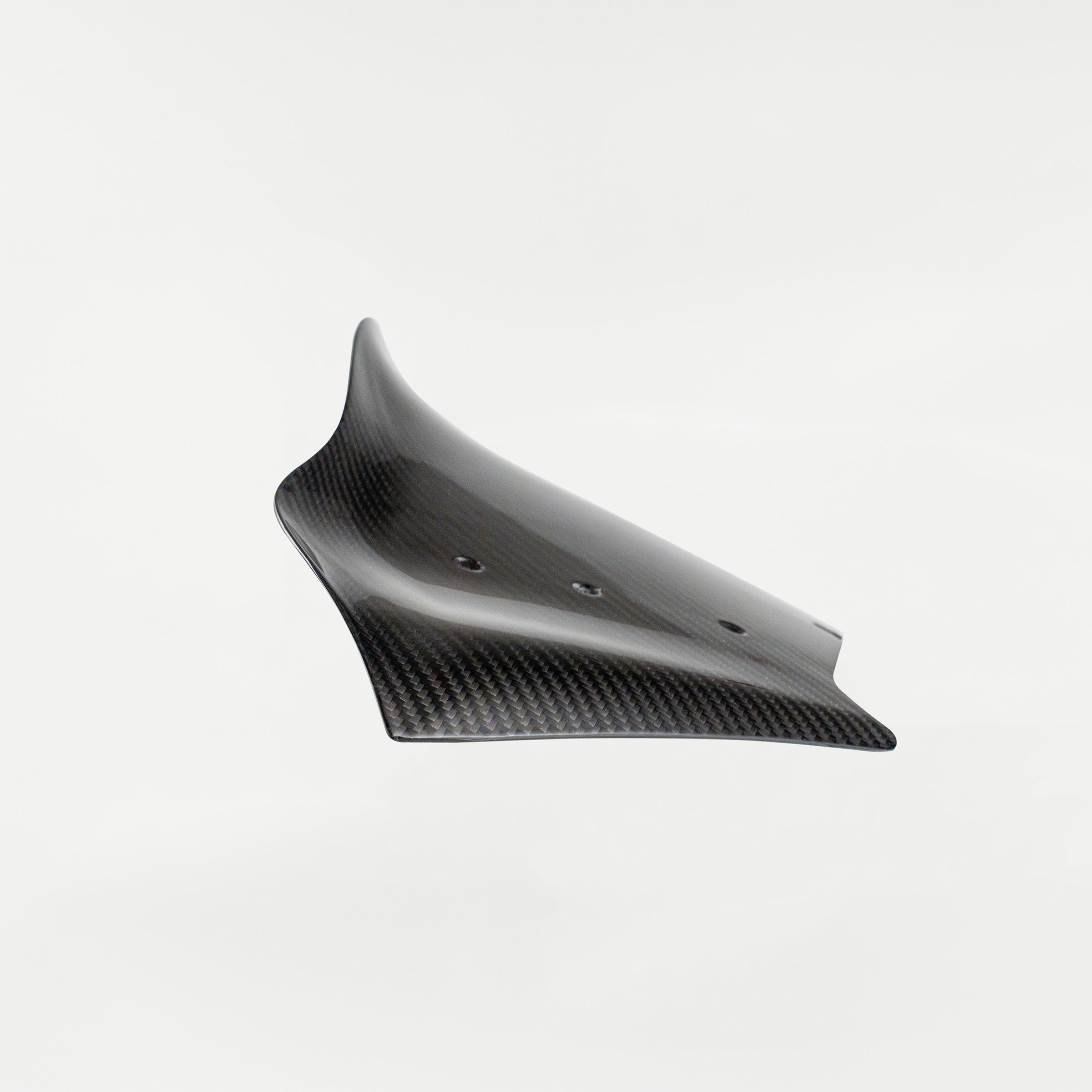
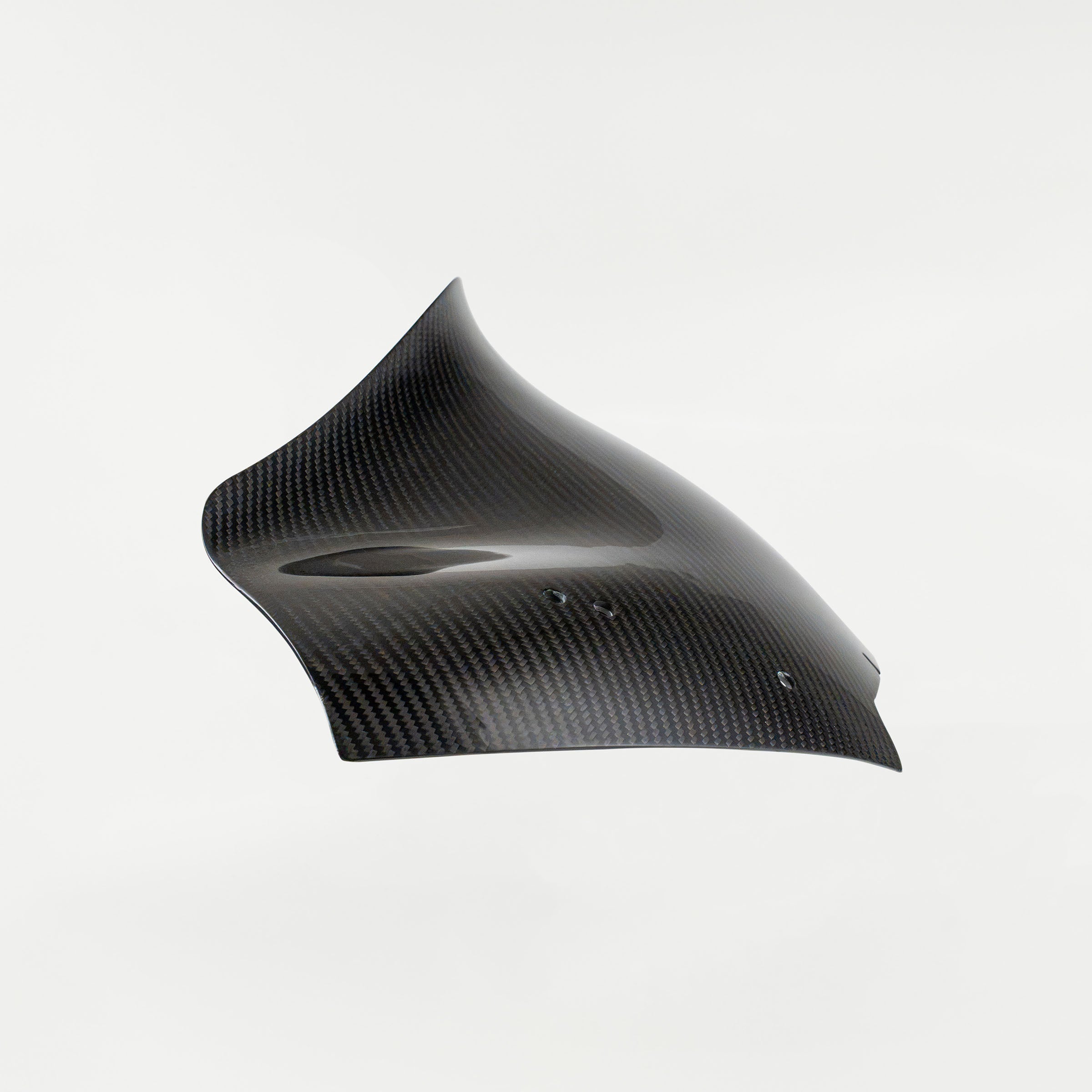
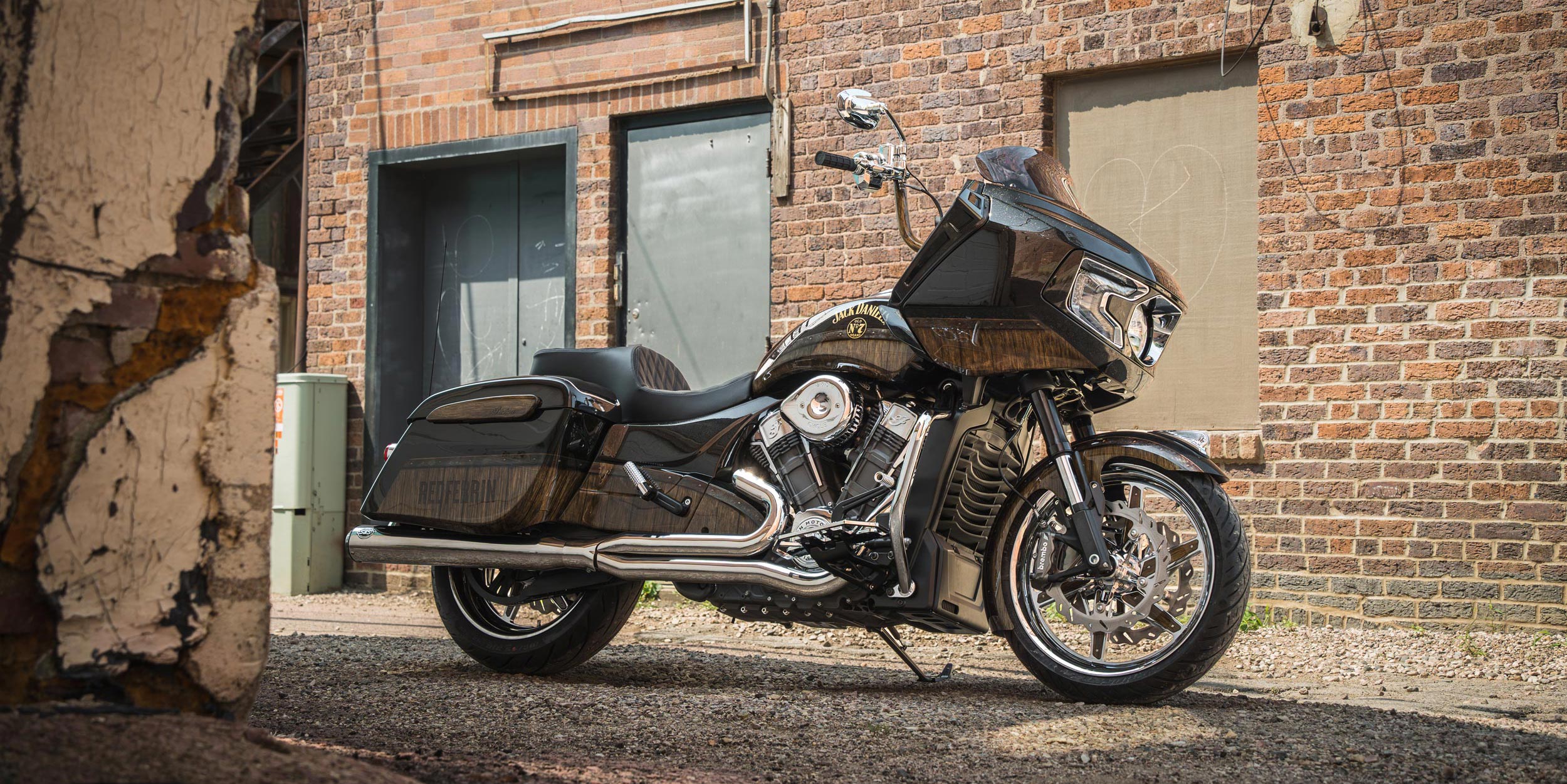
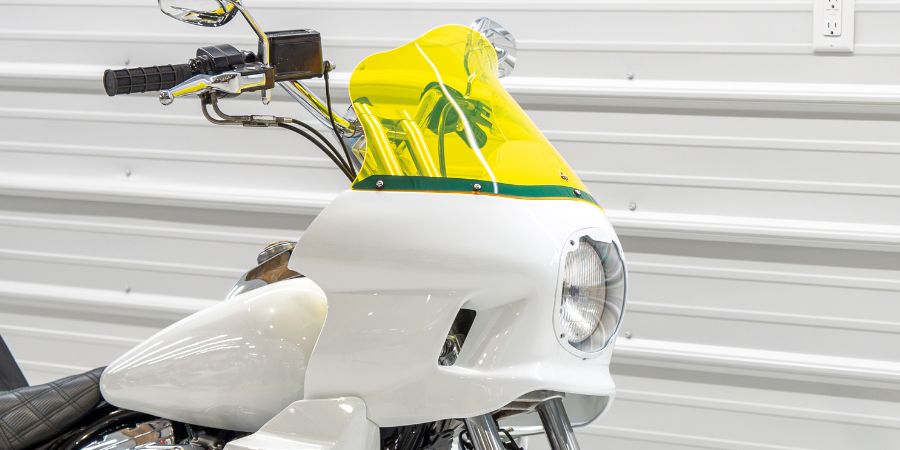
If your helmet shakes at highway speed, your ears ring after a long day, or your neck is sore before you reach the next gas stop, your windshield isn't managing the air. It's just in the way of it. The Flare® windshield was built to fix exactly that. It's the patented, wind tunnel tested shield that Klock Werks developed after chasing speed records at the Bonneville Salt Flats, and it's now made for more than a dozen Harley-Davidson® models and a growing list of Indian®, BMW®, Honda® and other motorcycles.
This guide covers everything in one place: what causes buffeting, how the Flare® works, how to choose a height, which bikes it fits, what it's made from, and how to care for it.
Why Does Your Stock Windshield Cause Buffeting and Helmet Buzz?
Most stock windshields are shaped for an average rider on an average bike. When a flat or undersized shield meets air at highway speed, the air spills over the top edge and tumbles back into the cockpit in a rough, swirling wake. That wake is what shakes your helmet, fills your ears with noise and wears you out over a long ride. The same turbulence can also lift the front end slightly at speed, which is why some bikes feel light or vague in crosswinds and when passing trucks.
Taller isn't automatically better, either. A taller flat shield often pushes the turbulent wake right to helmet level, which is why so many riders say their buffeting got worse after an upgrade. For a deeper look at the physics, including the "bobblehead effect" and why it happens, read The Science of Motorcycle Air Management. If noise is your main complaint, start with How to Reduce Wind Noise and Buffeting on Your Motorcycle.

How Does the Flare® Windshield Actually Stop Turbulence?
The Flare® is designed around air management rather than wind blocking. Instead of putting a wall in front of the rider, it shapes the airflow so it moves cleanly up and around the cockpit. Two patented features do the work.
What Is the "Flip" Doing to the Airflow?
The Flip is the curved lip along the top edge. It kicks oncoming air up and over the rider's helmet, creating a calmer pocket of air behind the shield. Because the Flip moves air higher than a flat edge would, a Flare® can be shorter than a traditional shield and still keep the wind off your helmet, which means you look over it, not through it.
Why Do the "Hips" Matter for Stability?
The Hips are the flared curves on each side. They route air outward and around the rider and passenger instead of letting it push straight back. In wind tunnel testing at the A2 Wind Tunnel in Mooresville, North Carolina, Klock Werks found that a stock setup produced up to 30 pounds of lift at highway speed, and that a properly sized Flare® turned that into roughly 15 pounds of downforce. Riders feel it as a front end that stays planted in crosswinds and truck wash.
Want the full explanation of lift, downforce and turbulence? The Science of Motorcycle Air Management walks through it step by step.

Where Did the Flare® Windshield Come From?
The Flare® was born out of racing. After Klock Werks won the Discovery Channel's Biker Build-Off in 2006 with a performance bagger, the team took that Road Glide to the Bonneville Salt Flats and ran straight into a wall of air. The stock windshield caused lift and instability that held the bike back. Brian Klock reshaped the windshield to fix it, the bike went on to set land speed records, and it became known as the World's Fastest Bagger. That shape became the Flare®.
Read the full story in Klock Werks Wins 2006 Biker Build-Off: The World's Fastest Bagger, see how the testing and patents followed in Why Klock Werks Are the Air Management Experts, and follow the Street Glide version in History of the Flare® Windshield for Harley-Davidson® Street Glides.

How Do You Pick the Right Flare® Height for Your Bike?
There's no single height chart that works for every rider, because the right size depends on your height, your seat and your riding position. The rule is simple: choose a height you can comfortably look over while sitting the way you normally ride. The Flip moves the air above your helmet, so you don't need a shield you look through.
For Harley-Davidson® touring models, Flare® shields come in two families: Sport (shorter) and Pro-Touring (taller). Heights commonly run from 4 to 12 inches depending on the model.
To find your size:
- Use the Flare® Size Guide and watch the fitting video.
- Sit on the bike in your normal riding position and have a second person check your sightline over the fairing.
- Read How Motorcycle Windshield Height Affects Rider Comfort if you're between sizes.
- Try one on your own bike through the Try It Before You Buy It demo program at a participating dealer (dealer locator).
Which Motorcycles Does the Flare® Fit?
Every Flare® is shaped for a specific model and mounts to factory mounting points. Fitment depends on model and model year, so always confirm your bike in Shop by Ride or on the product page before you order. Each model below has its own guide with full fitment details.
|
Make |
Models |
Model guides |
|
Harley-Davidson® |
Street Glide® |
Flare® for 2023.5 to 2026 Street Glide; Street Glide model year guide; Complete Street Glide upgrade guide |
|
Harley-Davidson® |
Road Glide® |
Flare® for 2023.5 to 2026 Road Glide; Complete Road Glide upgrade guide |
|
Harley-Davidson® |
Ultra and Electra Glide |
|
|
Harley-Davidson® |
Low Rider® ST and Sport Glide |
|
|
Harley-Davidson® |
Heritage, Fat Boy, Road King and Softail |
|
|
Harley-Davidson® |
Dyna, FXR and Sportster |
|
|
Harley-Davidson® |
Pan America |
|
|
Harley-Davidson® |
Freewheeler, Tri Glide and Road Glide 3 trikes |
|
|
Indian® |
Challenger and Pursuit |
Kolor Flare® for Challenger and Pursuit; Challenger parts guide |
|
Indian® |
Chieftain and Roadmaster, including PowerPlus |
Flare® for 2025+ PowerPlus; PowerPlus parts guide; Chieftain parts guide; Roadmaster upgrade guide |
|
Indian® |
Scout |
|
|
BMW® |
R 18, R 1200 RT, R 1250 RT and K 1600 |
|
|
Honda® |
Gold Wing and F6B |
|
|
Yamaha® |
Select models, including Stratoliner |
Yamaha® Stratoliner windshields; The right windshield for every Yamaha® rider |
|
Kawasaki® |
Voyager and Vaquero |
|
|
Other |
Saddlemen® S-RT mini fairing, select Victory® and Polaris Slingshot® models |
Shop the full Flare® Windshield collection.
What Is the Flare® Made From, and How Is It Finished?
Clear and tinted Flare® shields are made from Lexan polycarbonate with an FMR hard coat for scratch resistance.
Kolor and Ice series shields are cast acrylic, chosen for optical clarity and heat resistance, in colors that match or contrast your paint. Compare every option in Flare® Tint and Kolor Options.
Carbon fiber Flare® shields are available for 2023.5 and newer Street Glide®, Road Glide® and Low Rider® ST models.
Dark Smoke and Solid Black finishes can't be seen through, so they're for shields sized to look over. Tint rules vary by state, so check your local laws. See Why Choose a Solid Black Flare®.
What Do Riders Ask Before Buying a Flare®?
Q: Will my fairing pouch still fit?
A: Yes. Flare® shields work with standard three-pocket fairing pouches on Road Glide®, Street Glide® and Electra Glide® models.
Q: Is it hard to install?
A: No. Every Flare® uses the stock mounting points and comes with instructions. Most riders install it at home, and any dealer can install it for you.
Q: What's the difference between the Sport and Pro-Touring Flare®?
A: The Sport is shorter and narrower for a lean, streamlined look. The Pro-Touring is taller and wider for more chest and shoulder coverage on long days.
Q: Does it help my passenger?
A: Yes. The Hips route air out around the cockpit, so less of it reaches the passenger on long rides.
Q: Will I hear my audio better?
A: Most riders do. A calmer air pocket means less wind noise at helmet level. Pair it with Dynamat® Sound Control Kits to cut fairing rattle too.
How Do You Care for a Flare® Windshield?

Clean your Flare® with a plastics cleaner that's safe for polycarbonate and a clean microfiber cloth. We recommend Shine Werks. Mild soapy water works in a pinch. Never use petroleum or ammonia based glass cleaners, rain repellent coatings or aerosol sprays. They can haze or crack the shield, and that damage isn't covered under warranty.
Step by step instructions are in Flare® Care: How to Clean a Klock Werks Windshield Without Damage, and What Happens If You Don't Care for Your Flare® Properly shows what to avoid.
What's the Warranty on a Flare® Windshield?
Most Flare® windshields carry a limited warranty against manufacturing defects. Terms vary by product. Returns and exchanges are accepted only on shields that haven't been installed, because installation can leave fine scratches around the bolt holes. The customer generally covers return shipping. Full details are on the Warranty and Returns page, and that's another reason to try a demo shield at a dealer before you buy.
Is Klock Werks Legit? The Credentials Behind the Flare®
Klock Werks started as a small motorcycle shop in Mitchell, South Dakota, and still designs and ships from there. Founder Brian Klock is a Sturgis Motorcycle Hall of Fame inductee, the Flare® design is patented and wind tunnel tested, and Flare® products have earned the Cycle Source 2024 Source Award for Best Accessory Product and the Powersports Business Nifty 50 Award. See the full case in Why Klock Werks Are the Air Management Experts.
Ready to Find Your Flare®?
Start with your bike in the Flare® Windshield collection, pick your height with the Size Guide, or call the Klock Krew in Mitchell and we'll help you choose.

People Also Ask
Q: Does the Flare® Windshield really reduce buffeting?
A: Yes. Buffeting comes from turbulent air recirculating in the pocket behind an undersized or flat shield. The Flare's flip redirects that air up and over the rider before it can recirculate, which is why riders notice less helmet buzz and wind noise almost immediately after installing one sized correctly for their riding position.
Q: What size Flare® Windshield do I need?
A: Size depends on your riding position, not a fixed height chart. Choose a size you can comfortably look over while sitting in your normal riding stance where the flip should sit just below your natural sightline. Klock Werks offers a free height-fitting guide, a fitting video, and a "Try It Before You Buy It" program at participating dealers to help you confirm size before ordering.
Q: Is the Flare® Windshield worth the extra cost over a standard flip shield?
A: For most riders, yes, because the cost difference reflects patented, wind-tunnel-tested technology rather than a flat piece of shaped polycarbonate. In A2 Wind Tunnel testing, the Flare® converted up to 30 lbs of stock aerodynamic lift into roughly 15 lbs of controllable downforce for a stability improvement a generic shield isn't engineered to deliver.
Q: Can I install a Flare® Windshield myself?
A: Yes, in most cases. The Flare® is designed to bolt onto your bike's existing stock mounting points and ships with installation instructions. Riders who prefer not to DIY can have a dealer install it.
Q: Does the Flare® Windshield fit Indian and BMW motorcycles, or only Harley-Davidson?
A: The Flare® fits a wide range of makes, not just Harley-Davidson. Current fitment includes Indian (Challenger, Pursuit, Scout, Chieftain, Roadmaster, Springfield, Chief), BMW (R18, R1200RT, R1250RT, K1600), Honda (Gold Wing, F6B), and select Kawasaki, Yamaha, Victory, and Polaris Slingshot models, in addition to the full Harley-Davidson lineup.