Don't Ruin Your Flare® Windshield!
At our Shop in Mitchell South Dakota, we see hundreds of bikes a year. We see both the pristine customs destined for the Sturgis stage and the high-mileage baggers that have crossed the country ten times over. The one thing that breaks our hearts every time is seeing a high-performance machine with a Flare® Windshield that is clouded, scratched, or, worst of all, peeling.
We are the Air Management Experts, but even the best design in the world can’t overcome a rider who treats their shield like a kitchen window. A windshield isn't just a piece of plastic; it is a critical safety component that reroutes "dirty air" up over and around your head and provides a clear window to the road when the elements take hold.
Why Does Improper Care Lead to Windshield Peeling?
One question our Krew gets is, "Why is the surface of my windshield starting to flake or peel?" To understand this, you have to understand the science of the material.
Klock Werks Flare® Windshields (the standard tinted versions) are made from premium, high-impact, hard-coated polycarbonate. Unlike acrylic, polycarbonate is incredibly strong but naturally "soft" regarding surface scratches. To fix this, we apply a specialized FMR (Flexible Material Resistant) hard-coating to both sides of the shield. This coating is what gives the shield its glass-like clarity and scratch resistance.
The Delamination Process
When you use harsh chemicals—specifically anything containing ammonia, alcohol, or heavy detergents—those chemicals seep into the edges of the shield or penetrate micro-scratches in the coating. Over time, the chemical reaction weakens the bond between the hard-coating and the polycarbonate base.
Once that bond is broken, the coating begins to lift. This is what riders describe as "peeling." It often starts at the mounting holes or along the edges where the laser-cut seal is most exposed. Once the peeling starts, there is no way to "glue" it back down. The protective layer is failing, and the raw polycarbonate underneath is now exposed to UV rays and road debris, leading to further degradation.
The "Boneville Legacy": Why We Use High-Performance Coatings
Our obsession with material quality is "Race-Tested." In 2006, after winning the Discovery Channel Biker Build-Off, our founder, Brian Klock (a Sturgis Motorcycle Hall of Fame inductee and the "King of the Baggers"), took the "World’s Fastest Bagger" to the Bonneville Salt Flats.
Out on the salt, the environment is brutal. High-speed salt spray, intense UV radiation, and temperatures that would melt lesser components taught us that "good enough" isn't an option. We developed the Flare® to handle the grit of the real world. That same dedication to durability is why we use 14-gauge steel for our fenders—we believe parts should be built to last. When you ignore the care instructions for your Flare®, you are essentially stripping away the protection that both keeps you safe at 80 mph and makes your ride look good.
What Are the Chemical Enemies of Your Flare® Windshield?
If you walk into your garage and grab a bottle of standard blue window cleaner, you are holding the primary enemy of your windshield.
The Ammonia Threat
Ammonia is a powerful solvent. While it’s great for cleaning the grime off your home’s glass windows, it is chemically incompatible with polycarbonate and its hard-coatings. Ammonia causes "crazing" or thousands of microscopic cracks that eventually lead to the peeling and clouding mentioned earlier.
The Alcohol Issue
Similarly, high concentrations of isopropyl alcohol can dry out the material and the gaskets used in your fairing. If you are cleaning your bike with "all-purpose" cleaners that aren't specifically labeled as plastic-safe, you are risking the integrity of your shield.
Precision Design and Materials
We don't just "cut out" windshields. The Flare® is an engineered component:
-
Precise Fitment: Every shield is precision fit to the exact tolerances of your bike's factory mounting points. This prevents the "stress fractures" that occur when you have to force a poorly made shield into place.
-
Impact Strength: Our polycarbonate can take a rock at highway speeds without shattering, unlike the low-quality cheap acrylic options on the market.
-
Optical Grade Quality: We ensure our shields have minimal distortion, which is why we recommend the "look over, not through" height.
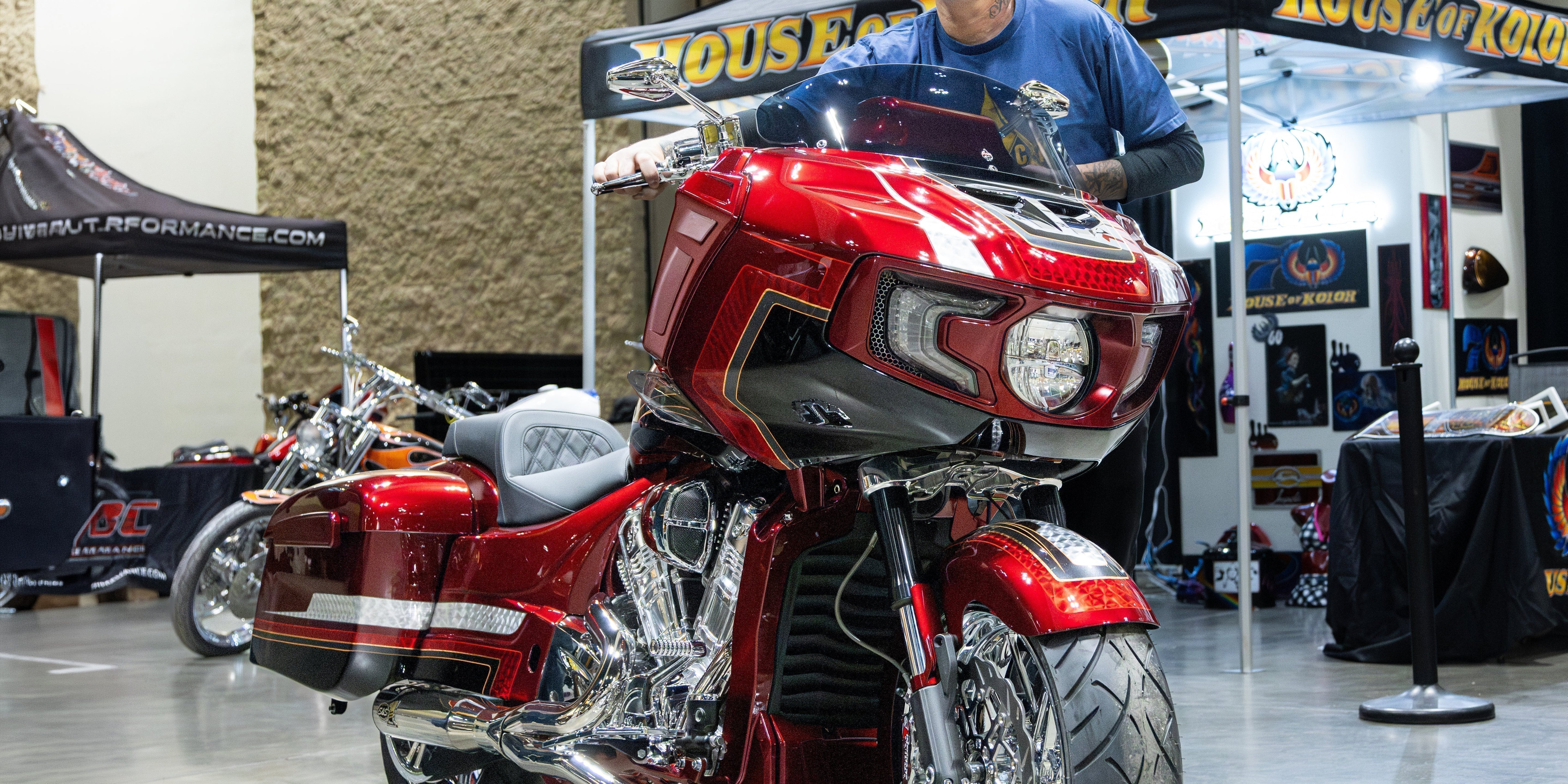
We’ve applied this same level of technical "Air Management" expertise to our collaborations with Jack Daniels and Indian Motorcycle. When we design a limited-edition custom for a brand of that caliber, every detail must be perfect from the 14-gauge steel lines to the clarity of the Flare®.

How to Klean Like the Krew
When you see the Klock Werks Krew at a rally like Sturgis or Daytona, we aren't just there to sell parts; we are there to help you maintain your ride. Here is the step-by-step method for cleaning your shield without causing peeling or scratches:
-
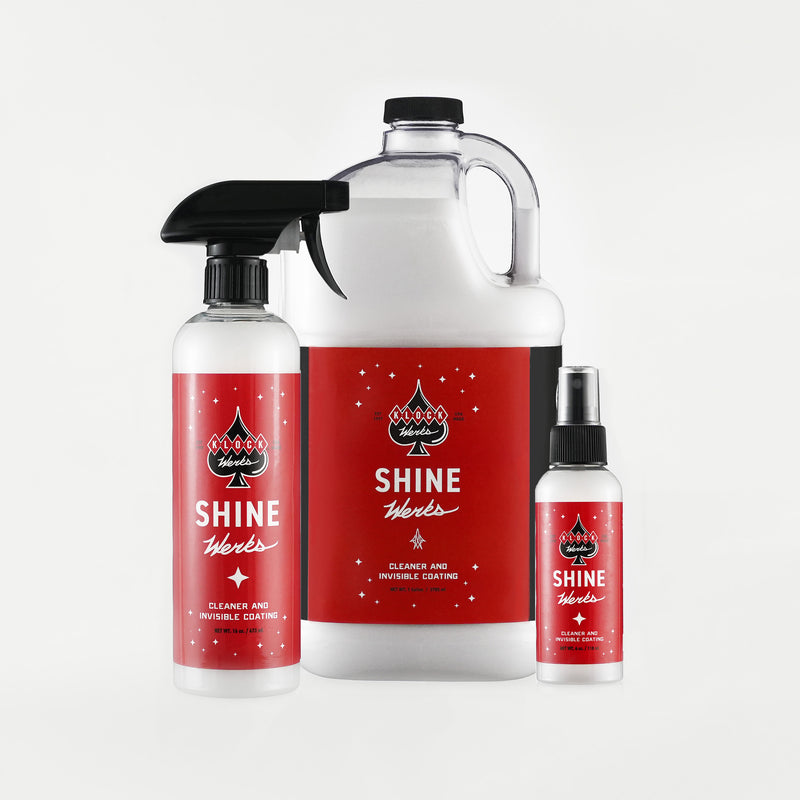
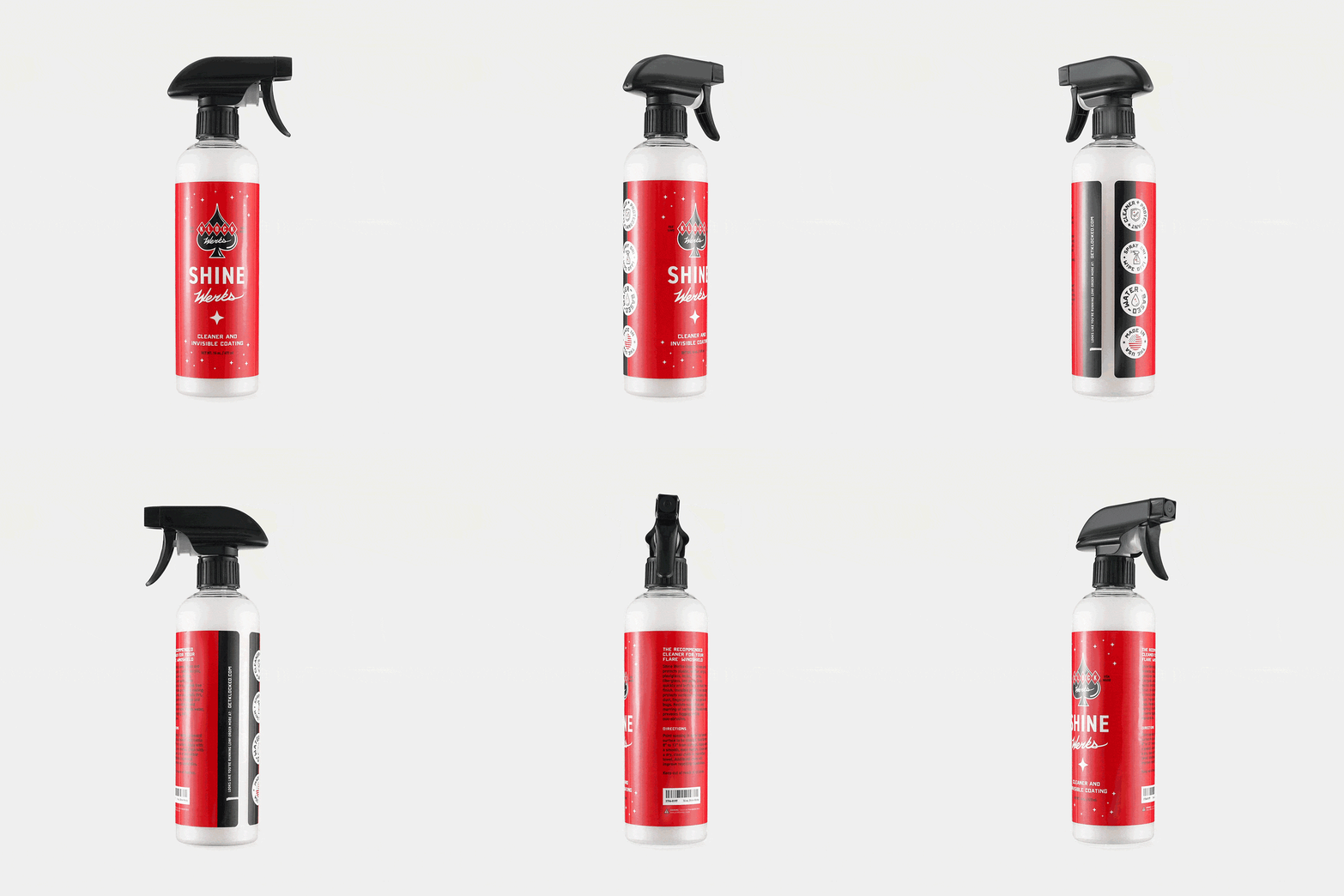
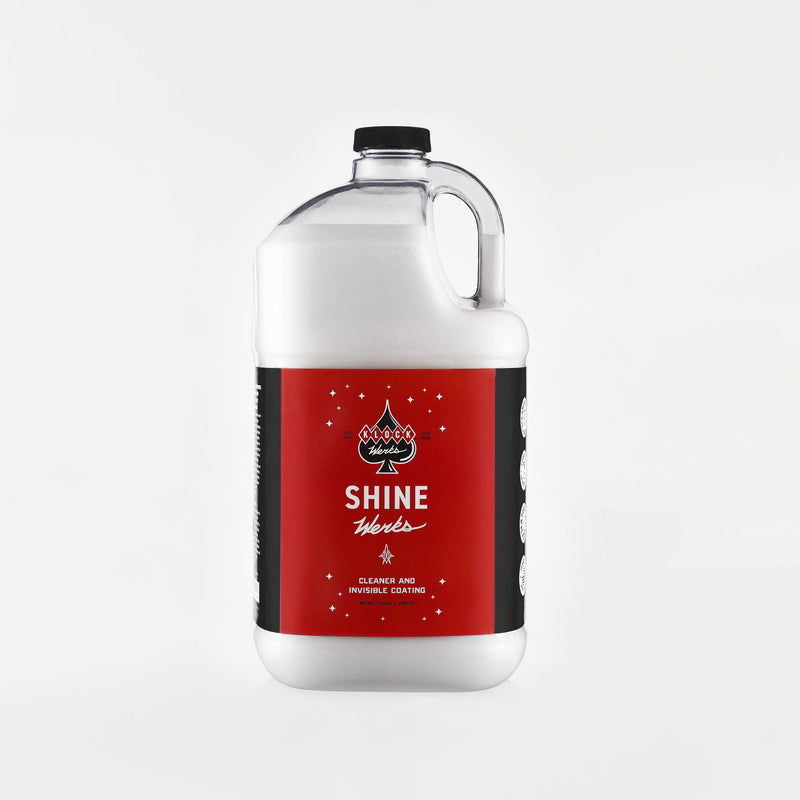
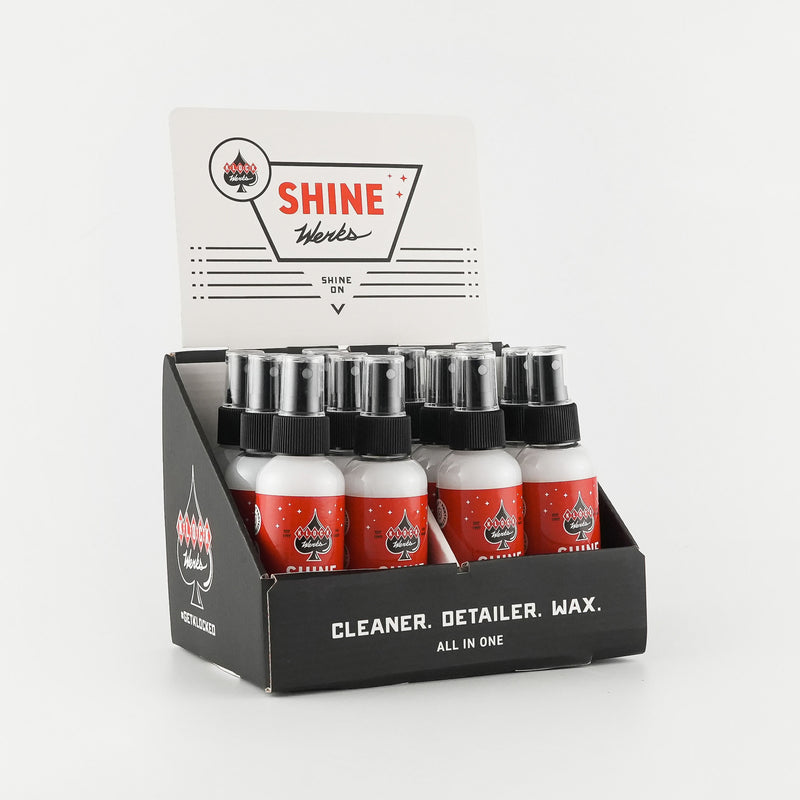
Flood the Surface: Never wipe a dry windshield. If you have a layer of dust or salt, use plenty of water or a dedicated motorcycle cleaner like Shine Werks to "float" the debris away.
-
The "Soak" Method: For stubborn bugs, soak a clean microfiber towel in warm water or cleaner and lay it over the shield for 60 seconds. Let the chemistry do the work so you don't have to scrub.
-
Vertical Wipes Only: Avoid circular motions. If a piece of grit gets trapped in your towel, a circular motion creates a "swirl" that catches light from every angle. A vertical wipe keeps any potential micro-scratch in a single plane, making it much less distracting.
-
Microfiber Only: Throw away the paper towels. Paper towels are made from wood pulp and are essentially high-grit sandpaper for your hard-coating.
Can You Save a Peeling Windshield?
Riders often ask us if they can sand down a peeling shield and "re-coat" it. The honest answer: No. Once the FMR hard-coating has begun to delaminate, the optical clarity is compromised. Sanding the shield removes the protective UV layer, meaning the shield will turn yellow and become brittle within weeks of sun exposure. Furthermore, the "hips" and "flip" of the Flare® design are mathematically designed for specific air-flow patterns. Any sanding or heavy buffing changes that profile and can lead to increased turbulence and reduced downforce.
If you find your current shield is already starting to show signs of chemical damage or delamination, it’s time for a fresh start. You can Shop the full Flare® Windshield collection here to restore your "Fit, Function, and Style" before your next trip.
Experience the "Fit, Function, and Style" Standard
At Klock Werks, we value faith, family, and hard work. We want you to enjoy your ride for years, not just one season. Treating your Flare® Windshield with the proper care ensures that the your windscreen continues to keep your front end stable and your head clear of buffeting.
Don't let a $5 bottle of cheap cleaner ruin a high-performance part. Stick to the Klock Werks way: use the right tools, the right cleaners, and treat your machine with the respect it deserves.
People Also Ask (FAQ)
1. Why is my Klock Werks Flare® Windshield peeling at the edges?
Peeling is usually caused by the use of ammonia-based cleaners or harsh chemicals that have compromised the bond between the polycarbonate base and the FMR hard-coating. It can also occur if the mounting bolts are over-tightened, causing stress cracks that allow moisture and chemicals to seep under the coating.
2. Can I use rain-repellent products (like Rain-X) on my Flare®?
Standard Rain-X is designed for glass and contains chemicals that can damage polycarbonate. If you want water to bead off your Flare®, use a product specifically formulated for motorcycle plastics, such as Shine Werks, which provides a protective, slick surface without damaging the hard-coating.
3. Is it safe to use a gas station squeegee on my windshield?
We strongly advise against it. Those buckets of water are filled with grit, oil, and harsh detergents from thousands of cars. Using a gas station squeegee is the fastest way to scratch your shield and introduce chemicals that lead to peeling and clouding.
4. How often should I replace my microfiber cleaning towels?
You should use a fresh, clean side of a microfiber towel for every cleaning. Once the towel has been dropped on the ground or is visibly dirty, it should be washed (without fabric softener) or replaced. A dirty towel is just a carrier for abrasive grit that will ruin your hard-coating.
5. Does the "Ice" or "Kolor" series peel like the tinted shields?
The Kolor® and Ice series are made from high-grade acrylic, which does not have the same type of hard-coating as the polycarbonate shields. While they won't "peel" in the same way, they are more susceptible to chemical "crazing" and cracking if cleaned with improper solvents like alcohol or ammonia. Always use mild soap and water or an approved plastic cleaner.