A Custom Rigid 2016 Indian® Scout
Indian Motorcycle has been building motorcycles since 1901, giving the brand 125 years of history, innovation and motorcycles that have become part of American motorcycling culture. At Klock Werks, we are proud to have been part of that story for a portion of those years, working with Indian Motorcycle on custom builds, limited edition motorcycles and projects that have pushed the platform in new directions.
From our shop in Mitchell, South Dakota, the Klock Werks Krew has had the opportunity to build Indian Challenger, Chieftain, Chief and Scout customs, including projects created in partnership with Indian Motorcycle and Jack Daniel’s. Every build brings its own set of challenges and its own opportunity to see what can be done with the platform.
Project Princess might be one of the best examples of that philosophy.
Built by Karlee Cobb - local Mitchell, South Dakota business owner, Bonneville record holder, and daughter of Brian Klock - for Michael Lichter’s 2017 Old Iron, Young Blood exhibit, Princess started with an Indian Scout and became something entirely its own. The motorcycle retains the details that make it unmistakably Indian while changing nearly everything around them, from the frame and tank to the engine finish, wheels, controls, paint and bodywork.
The result is a motorcycle that is difficult to mistake for anything else.
If you want to shop all Klock Werks parts for Scout®, check out the full collection.

Why Was Project Princess Built?
The idea behind Princess started with a pretty simple question: How do you build an Indian Scout that nobody has seen before without losing the character that makes it an Indian?
That question becomes a lot more complicated once you start taking the motorcycle apart.
The Scout already has a recognizable silhouette, and the Indian design details are a big part of what makes the motorcycle work. The tank, engine and Indian head styling give the bike a personality of its own, so completely changing the motorcycle could easily mean losing what made it special in the first place.

Karlee took a different approach. Instead of trying to erase those original details, she kept the elements that mattered and built everything around them.
The name Princess came from a small piece of Indian history that ended up becoming one of the most recognizable details on the motorcycle. A friend gave Karlee an Indian bicycle head badge from a bicycle called the Princess. Rather than putting the badge away somewhere, she mounted it on the outside of the fairing near the headstock.
From there, the motorcycle became Princess, and the name stuck.
What Inspired Karlee’s Indian Scout Build?
Karlee grew up around motorcycles and spent years around photographer and motorcycle historian Michael Lichter. Her experiences took her everywhere from the Bonneville Salt Flats to Sturgis and countless motorcycle events in between, giving her an opportunity to see a wide range of motorcycles, builders and ideas.
In 2017, Lichter’s exhibit at the Buffalo Chip was titled Old Iron, Young Blood. The exhibit brought together young builders under the age of 30 and challenged them to create motorcycles that represented their generation.

Karlee took on the challenge with an Indian Scout.
The goal was never to simply bolt on a list of aftermarket parts and call it finished. The motorcycle needed to have its own personality, which meant changing the chassis, narrowing the tank, reworking the controls, completely transforming the finish and carrying a visual theme from the front of the motorcycle all the way to the tail.
That is what makes a custom build interesting. It is not necessarily about how many parts you can change. It is about how those changes work together to create something that feels intentional.
How Did the Rigid Frame Change the Scout?
One of the biggest changes to Princess was the frame. Klock Werks teamed up with Twisted Choppers in Tea, South Dakota, where Karlee worked with Jason Kangas to develop the rigid frame for the Scout.
Converting the Scout to a rigid frame completely changed the look of the motorcycle. The factory Scout has a modern chassis designed around a very different riding experience, while the rigid conversion gives Princess a cleaner, more traditional custom profile. It strips away some of the visual complexity and gives the motorcycle more of a hot rod stance.
Jason also handled the mid control pegs and several other custom components, while Twisted Choppers built the pipes that help give Princess its gritty hot rod personality.
The important thing is that those changes do not overpower the Indian identity of the motorcycle. The Scout is still recognizable underneath all of the custom work.
That balance is a big part of what makes a custom motorcycle successful. It should look like the person who built it, not like a collection of parts pulled from a catalog.
Why Was the Indian Scout Tank Narrowed?
The fuel tank is another detail that makes a bigger difference than you might expect.
Karlee and Jason retained the center ridge and factory gas cap, but folded the sides of the tank inward to create a considerably narrower profile. The result keeps the tank tucked inside the triple trees and changes the relationship between the tank, frame and front end.
It is a relatively subtle fabrication change, but it has a major effect on the overall stance of the motorcycle. With the narrower tank, the Scout immediately takes on more of a hot rod appearance.
This is one of those details that can be easy to overlook when looking at photographs of the finished bike, but it is exactly the kind of change that can make an entire motorcycle feel different. Instead of simply adding something new, the shape of an existing component was changed to make the parts around it work together better.

How Was the Indian Scout Engine Transformed?
The engine is one of the biggest visual statements on Princess, and it is also one of the details that immediately sets the motorcycle apart from a stock Scout.
Princess features what is described as the first ever fully polished Indian Scout motor. Karlee Cobb and Jen Bainbridge completely disassembled the engine before sending it to Steve Langston at Elite Polishing.
Polishing an engine like this is a serious undertaking because a modern V twin engine has architectural lines, cast surfaces, corners, recesses and countless smaller areas that all become visible once the surrounding components are finished. Every one of those surfaces had to be disassembled and meticulously polished for the engine to become the major focal point of the motorcycle.
Steve polished the complete engine, turning what would normally be a darker mechanical centerpiece into one of the brightest parts of Princess.
The interesting part is that the engine still looks unmistakably Indian. The polished finish added a new element of character of the Scout motor giving it a completely different overall look, feel and vibe.

Why Does the Chrome Treatment Work on Princess?
Most Scouts leave the factory with a darker visual treatment, so Karlee took Princess in the opposite direction.
Chrome is everywhere, which sounds simple enough, but not every component on a Scout can simply be sent off to a chrome shop. The factory Scout controls are plastic, so there was no straightforward way to chrome them. The build had to work around those limitations while still making the pieces that could be transformed fit into the overall design.
Then came the wheels. Karlee took the Arlen Ness wire wheels from Brian Klock’s personal Road Glide FXR and put them to work on Princess. The wheels feature a distinctive inner hub that fits the old school hot rod look of the motorcycle while still working with the modern Scout platform.
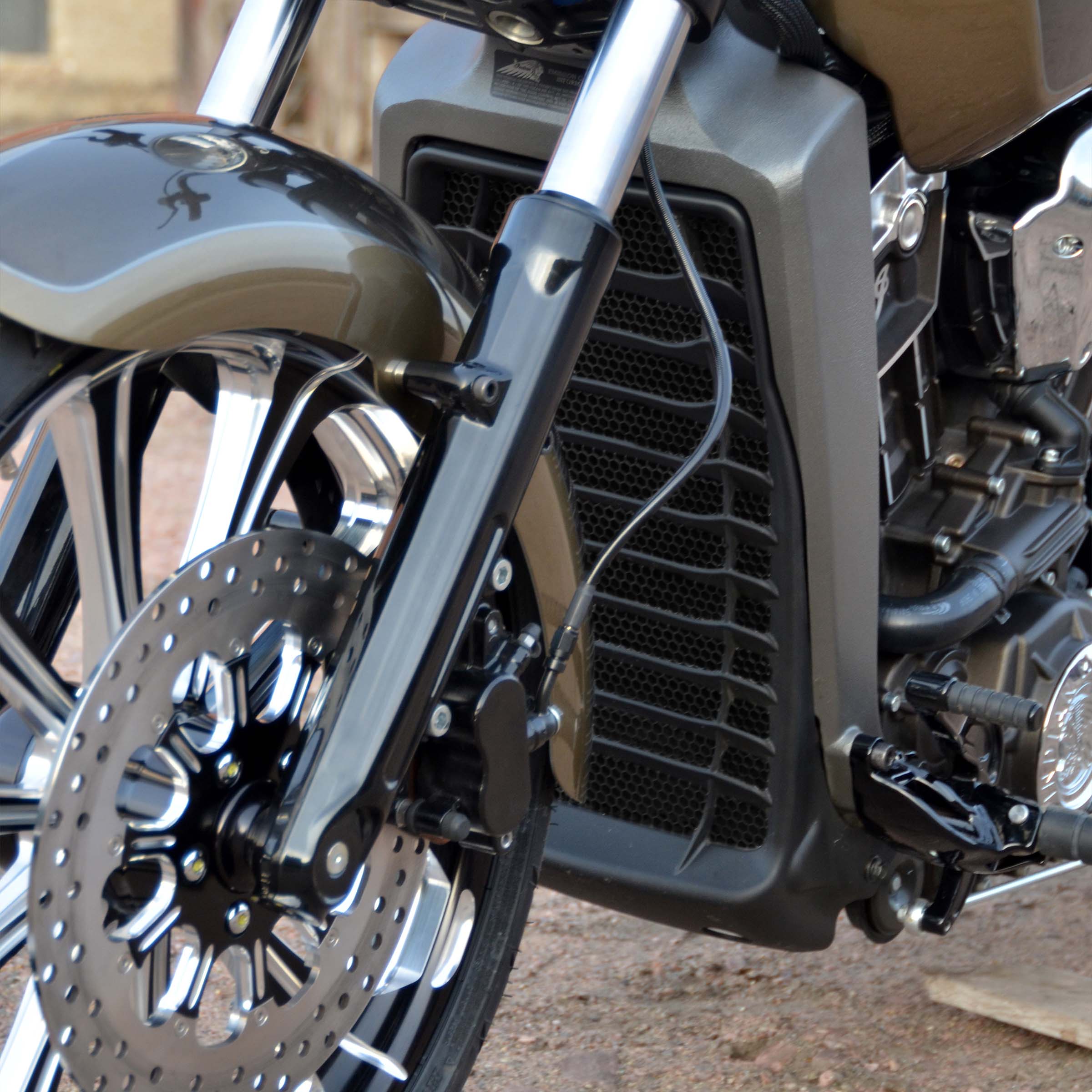
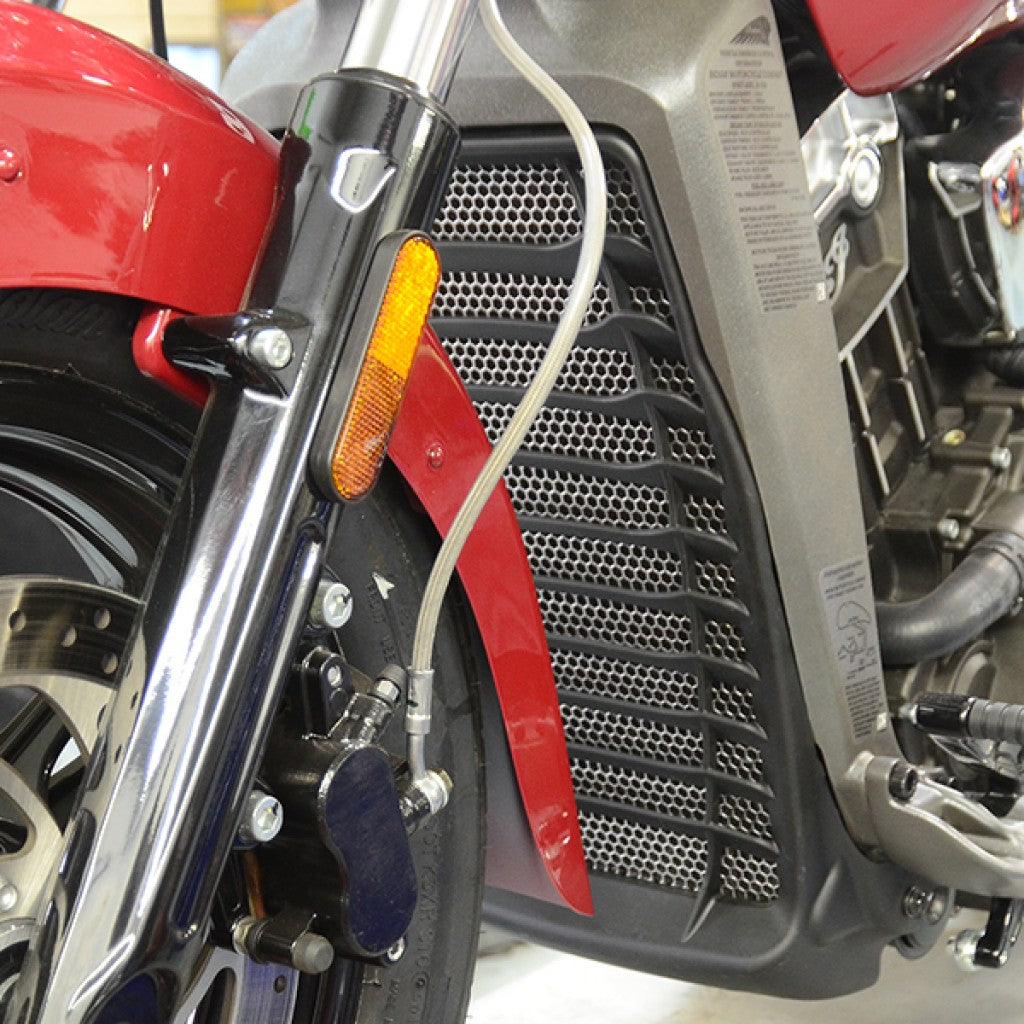
The radiator was also custom made to accommodate the polished engine and keep the motorcycle running properly.
There is a difference between a motorcycle that looks good sitting still and one that has actually been engineered as a complete build and its important that he parts to work together so the finished motorcycle still holds up on the road and functions as a motorcycle. Princess was built with both things in mind.

How Did the Paint Bring the Build Together?
Once the chrome direction was established, Karlee wanted to bring color into the build. She also wanted a yellow headlight, because apparently chrome, red, gold and yellow can all work together when the right person is behind the build.
Brad Smith, formerly a painter in Tea, South Dakota, handled the paintwork.
The motorcycle uses variegated red gold leaf, which gets its name from the variation in color throughout the finish. Red and orange tones run through the gold leaf and continue across the motorcycle, including the Indian logo and is part of what makes the finish work.
The paint colors work to connect the tank, bodywork, logos and smaller details so the entire motorcycle feels like one complete design.
What Custom Components Complete Project Princess?
The list of one off components on Princess is long and part of what makes the motorcycle so interesting. The mid controls were custom built, the oil bag was fabricated specifically for the bike, and the electronics area was customized to fit the overall design.
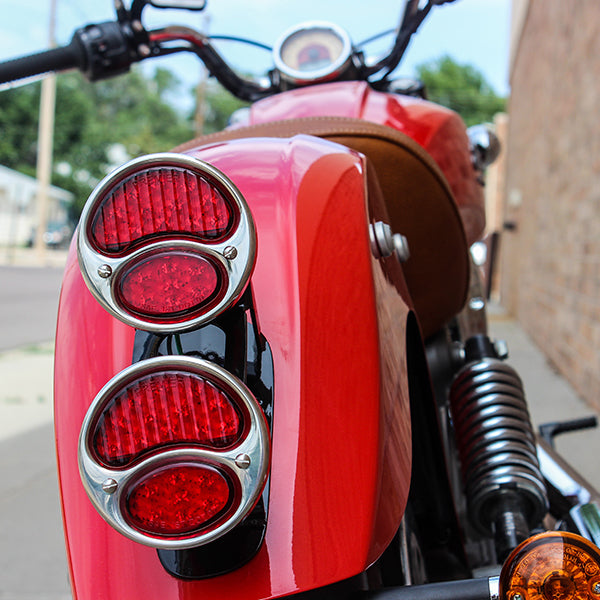
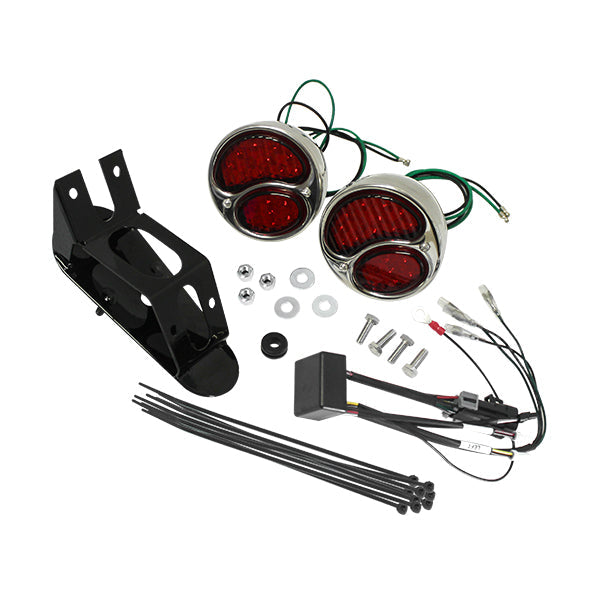
Bare Bones Leather handled the tooled seat, including another Indian logo detail that pays tribute to the heritage of the brand. Twisted Choppers built the tail light and custom license plate mount, while a K&N air filter was added to the engine.
Even the smaller pieces received attention. The chain guard is a unique one off component, the coolant tank was customized and the stock brakes were polished. Then they were polished again, and again.
That is one of the realities of building a motorcycle to this level of finish. Once one component is polished, everything around it starts to look different. A bracket that might have gone unnoticed on a stock motorcycle suddenly stands out. An unfinished line becomes obvious. A small detail that does not fit the rest of the motorcycle can pull your eye away from everything else.
When the goal is to create a complete motorcycle, every piece matters.
What Does Princess Have in Common With Klock Werks’ Other Custom Builds?
Princess was built around the same philosophy that has driven Klock Werks for decades: motorcycles should be meant to be ridden, not just photographed. A philosophy has been tested in some pretty unforgiving places.
In 2006, Brian Klock and the Klock Werks Krew won the Discovery Channel’s Biker Build-Off with the Road Glide that became known as the WFB, or World Famous Bagger. Not long after, the team took that motorcycle to the Bonneville Salt Flats and began chasing land speed records.
The high speed testing exposed a major airflow problem, which led directly to the development and invention of the patented Flare® Windshield.
That race tested experience still influences the way the Krew approaches motorcycles today. Whether we are building a custom motorcycle or developing a motorcycle part, the goal is to make sure the finished product makes sense beyond the photograph.
Brian Klock, known throughout the motorcycle industry as the “King of the Baggers,” is also an inductee in the Sturgis Motorcycle Hall of Fame.
Princess takes that same idea in a different direction. It is visually wild, but the motorcycle was still thoughtfully engineered as a complete build.

How Does Klock Werks Approach Motorcycle Parts Differently?
In the Klock Werks shop in Mitchell, South Dakota, the Krew sees motorcycles at every stage of a build. We know the difference between a part that simply looks good in a photograph and one that makes sense when the motorcycle is actually on the lift.
That philosophy is especially clear in the steel fenders Klock Werks produces today.
Klock Werks motorcycle fenders are stamped from 14 gauge steel rather than thin fiberglass or plastic. The manufacturing process uses deep draw stamping to create consistent curves, followed by e coat for corrosion resistance. Mounting holes are precision cut with 5 axis laser technology to provide accurate fitment and direct bolt on installation.
That technical approach matters because a fender is not simply a replacement body panel. It is part of the motorcycle’s stance and overall design.
The same mindset can be seen throughout Princess. Every major decision was made with the complete motorcycle in mind, from the frame and tank to the engine finish, wheels, paint and smallest details.
What Makes Project Princess Still Stand Out?
A lot of custom motorcycles are built around one big visual idea. Princess has dozens of them working together.
There is the polished Scout engine, rigid frame, narrowed tank, Arlen Ness wire wheels, custom radiator and Twisted Choppers exhaust. There is the red and gold leaf, the Indian detailing, the tooled seat, custom controls, yellow headlight and all of the chrome.
And then there is the Princess badge mounted near the headstock.
Individually, any one of those details could have become the centerpiece of the motorcycle. Together, they create something that feels cohesive, part of what make Princess so legendary.
Some motorcycles are impressive when they first roll onto a show floor, and sometimes the longer you look at them, the more disconnected the details begin to feel. Princess works the opposite way so the closer you look, the more you find.
Why Does Project Princess Matter to Indian Motorcycle’s 125th Anniversary?
Indian Motorcycle’s 125 year history is built on evolution. The motorcycles have changed dramatically since 1901, but the idea behind them remains familiar: build something that riders want to experience.
Princess represents that same idea from the custom side. While it is part Indian Scout, it is unmistakably Karlee, exactly the way any custom build should be. That is what makes the project special to Klock Werks.
At Klock Werks, we have had the opportunity to work with Indian Motorcycle on custom projects ranging from Scouts to Chiefs, Chieftains and Challengers. We have also helped create limited edition motorcycles with Jack Daniel’s and Indian Motorcycle, bringing together American motorcycle history, custom design and modern performance.
Project Princess Parts List
TECH SHEET
-
Owner: Karlee Cobb
OWNER: Karlee Cobb - Builder: Karlee/ (Klock Werks)
- Year/model: 2016 Indian Scout
- Time to build: 5 months
- Chromer: J+D Plating (St. Paul, MN)
- Polisher: Elite Polishing (Lincoln, NE)
- Powder coater: N/A
- Painter: Brad Smith (thefactorymatch.com)
- Color: PPG
ENGINE / TRANSMISSION
- Engine, year/model: 2016 Scout
- Builder: Jennifer Bainbridge (Klock Werks)
- Displacement: 1103cc
- Horsepower: 105
- Cases: Fully Polished (First in the world for an Indian Scout)
- Flywheels (make & stroke): Indian Motorcycle
- Balancing: Factory
- Connecting Rods: Indian Motorcycle
- Cylinders (make & bore): Indian Motorcycle
- Pistons (make & comp. ratio): Indian Motorcycle
- Heads: Fully Polished Indian Motorcycle
- Cam (make & lift): Indian Motorcycle
- Valves: Indian Motorcycle
- Rockers: Indian Motorcycle
- Lifters: Indian Motorcycle
- Push rods: Indian Motorcycle
- Carb: EFI-DynoJet Tuner
- Air Cleaner: K+N Filters
- Exhaust: Twisted Choppers (Jason Kangas)
- Ignition: Indian Motorcycle
- Coils: Indian Motorcycle
- Wires: Indian Motorcycle
- Charging System: Indian Motorcycles
- Regulator: Indian Motorcycle
- Oil Pump: Indian Motorcycle
- Cam cover: Indian Motorcycle
- Primary cover: Indian Motorcycle
- Transmission, year/model: 2016 Indian Scout
- Case: Fully Polished (Elite Polishing)
- Gears: Indian Motorcycle
- Mods: Indian Scout
- Primary drive: Indian Motorcycle
- Final drive: Chain conversion (Twisted Choppers)
- Kick Starter: N/A
- CHASSIS
- Frame (year, make): 2016 Twisted Choppers Rigid (Jason Kangas)
- Rake: N/A
- Stretch: N/A
- Front forks: Shaved Legs, Chromed Indian Scout
- Mods: First Water cooled custom scout Rigid in world!
- Swingarm: N/A
- Shocks: N/A
- Front Wheel (size / make): 19” Arten Ness/ Akront
- Rear Wheel (size / make): 18” Arten Ness / Akront
- Front brake (style / make): Chrome-Indian Motorcycle
- Rear brake (style / make): Chrome-Indian Motorcycle
- Front tire (make / size): Pirelli Night Dragon, 100/90-19
- Rear tire (make/ size): Pirelli Night Dragon, 180/55-18
- Front fender: N/A
- Rear fender: Twisted Choppers Custom
- Fender Struts: Internal
- Rail: N/A
ACCESSORIES
- Headlight: Little and Amber
- Taillight: Twisted Choppers
- Fuel Tank: Modified factory Scout
- Oil Tank: (In Motor)
- Handlebars: Modified Scout
- Risers: Biltwell
- Seat: Bare Bones Leather
- Pegs: Twisted Choppers
- Chain Guard: Randy Rothlisberger (Klock Werks)
- Speedo: N/A
- Dash: N/A
- License bracket: Twisted Choppers
- Mirrors: N/A
- Hand Controls: Indian Motorcycle
- Foot Controls: Custom Twisted Choppers Mids
- Levers: Indian Motorcycle
Klock Werks Parts
Partner Parts
- Twisted Choppers: Rigid frame, mid control pegs, custom fabricated components, pipes, tail light and custom license plate mount
- Arlen Ness: Wire wheels originally from Brian Klock’s personal Road Glide FXR.
- Elite Polishing: Complete polishing of the Indian Scout engine by Steve Langston.
- Bare Bones Leather: Custom tooled seat featuring an Indian logo detail.
- K&N: Air filter.
- Brad Smith: Custom paintwork featuring variegated red gold leaf and coordinated Indian logo detailing.
- Custom Fabrication: Princess also features a custom radiator, fabricated oil bag, customized electronics area, custom coolant tank, unique chain guard and polished stock brakes.
Frequently Asked Questions
What is Project Princess?
Project Princess is a custom rigid Indian Scout built by Karlee Cobb as part of Michael Lichter’s 2017 Old Iron, Young Blood exhibit. The motorcycle features a custom rigid frame, narrowed fuel tank, fully polished Scout engine, Arlen Ness wire wheels, custom fabrication, red gold leaf paint and numerous Indian inspired details.
Who built Project Princess?
Project Princess was created by Karlee Cobb, Brian Klock's daughter, with help from Klock Werks, Twisted Choppers and several specialty builders. Jason Kangas of Twisted Choppers worked with Karlee on the rigid frame, mid controls and other fabricated components. Steve Langston at Elite Polishing handled the extensive engine polishing, Brad Smith completed the paintwork and Bare Bones Leather created the tooled seat.
What makes Princess different from a stock Indian Scout?
Princess changes nearly every major visual area of the stock Scout while retaining recognizable Indian design elements. The motorcycle uses a rigid frame, narrowed tank, custom controls, custom exhaust, fully polished engine, custom radiator, Arlen Ness wire wheels, extensive chrome, custom paint and one off fabricated components.
Does Klock Werks make parts for Indian Scout motorcycles?
Yes. Klock Werks currently offers Indian Scout specific motorcycle parts, including front and rear steel fenders. The Scout front fender lineup includes Benchmark, Klassic and Outrider profiles, with fitments for Scout, Scout Sixty, Scout Bobber and Scout Rogue models.
Klock Werks also offers an Outrider rear fender for 2015 through 2024 Indian Scout, Scout Bobber and Scout Rogue models. It is designed as a direct bolt on replacement and can accommodate up to a 180 rear tire.
Why does Klock Werks use 14 gauge steel for motorcycle fenders?
Klock Werks uses 14 gauge steel because it provides a rigid, durable foundation for a motorcycle fender. The manufacturing process combines deep draw stamping, e coat corrosion protection and 5 axis laser cutting for accurate fitment and a painter ready surface. The Krew’s approach is focused on fit, function and style rather than simply creating a replacement body panel.