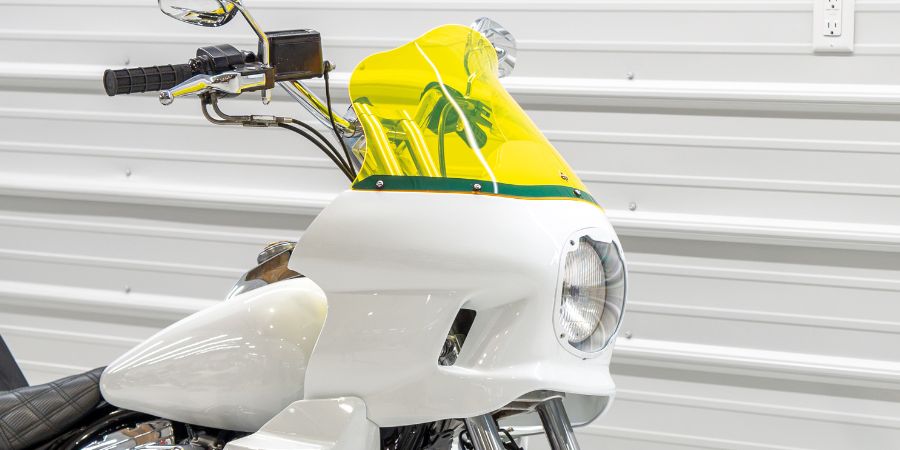
A Custom 2011 Harley-Davidson® Heritage Softail
There’s a version of this story that starts with a motorcycle. But the real version starts with horses.
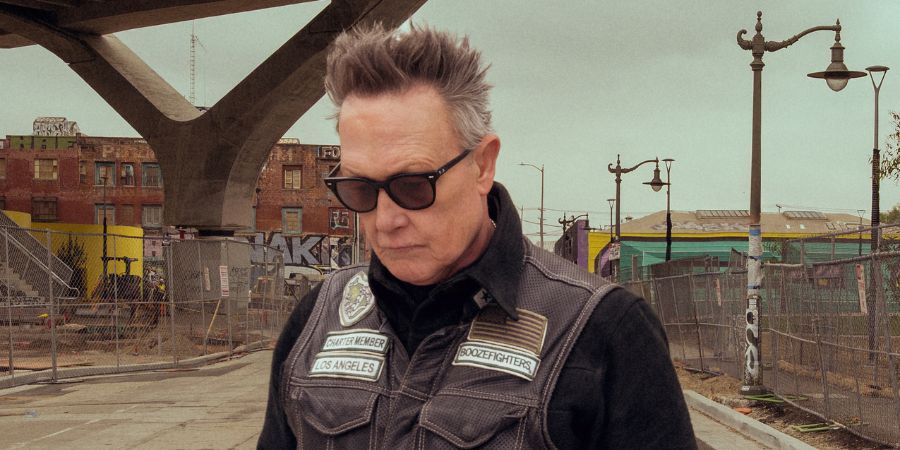
Dave Sietsema spent the better part of his life in the saddle showing horses, living the cowboy culture, understanding instinctively the relationship between a rider and the thing they ride. When he found his way into the world of steel horses via Klock Werks, he didn’t feel like he’d left that world behind. He felt like he’d just traded four legs for two wheels.
“Brian was able to show me how much the cowboy culture and the motorcycle culture are the same,” Dave says. “It really was a bunch of cowboys on steel horses with slightly different wardrobe changes. Instead of feeding horses hay, I feed my steel horse gas to make it run.”
That realization made him not only comfortable in the culture, but gave him an avenue to be part of the culture, and permission to build something that was unmistakably his.
The Vision: Where Two Worlds Collide
The name Cowboy Vicla says everything. It’s the intersection of who Dave is, a horseman, a cowboy at heart, and where his eye kept landing: the low rider world. The clean lines, the stance, the engraving. He’d seen it all before in conchos, saddle hardware, belt buckles. The aesthetic wasn’t foreign to him. It was just rendered in chrome and steel instead of leather and silver.
“Vicla” is a nod to the lowrider old-school, slow-rolling, show-stopping ride. For Dave, it fit. He wasn’t building something to race. He was building something to be seen. More importantly, something to be known.
The bike started as a 2011 Harley-Davidson Softail and a platform he was drawn to early. He looked at springer front ends, big traditional bags, tassels. That first vision evolved. But the softail stayed. It was always going to be a softail.

The Build: Seven Years in the Making
Dave is self-described as an overplanner. The idea gestated for six or seven years before steel was touched. He’s not a welder. Not a fabricator. But that’s exactly the point and exactly what makes this build matter to a lot of people who think custom is out of reach.
“I think a lot of people are like I was — fearful that it’s gonna take this major thing, because they look so good,” he says. “You think, man, that’s out of my skill set.”
What Dave had was the artistic eye, the vision, and the right team around him at Klock Werks to help him execute it.
The stance came first. Dave knew he wanted it to lay frame on blocks because that’s the low rider DNA of the build. The entire frame was dropped, all the welds smoothed out, and an air suspension system was added to let the bike raise and lower front and rear independently. The compressor was hidden. The switches were tucked under the gas tank. When it’s parked the right way, it sits flat on two blocks with no kickstand or lean. Just a bike sitting on the ground like it grew there.
“It makes me nervous every single time,” Dave admits with a grin, “because I’m so used to a kickstand.”

The tank is factory-faithful, with a twist. The green apple color? That’s the actual 2011 factory color option. The gold badging and gold leaf treatment on the smooth tank? That mimics what the original badging would have looked like minus the badges. Gold leaf and blue leaf were used to create the clean tank look while honoring the original palette. What looks custom is actually a deeply considered interpretation of what was already there.
The bars are Klock Werks KlipHangers to give it a tall, sweeping, posture that’s modern and bold without screaming for attention. It’s the kind of bar choice that makes the whole silhouette feel intentional.
White walls with smooth rims was something not a lot of people were doing it at the time. But Dave was. The wheels are clean, the walls white, the rims smooth and all of it pulling the low rider thread through every detail.
Chrome, obviously. This is a show bike. It needed to shine.
The rear fender was extended nine inches. They started with a base Klock Werks steel fender, the kind of bolt-on part that gives everyday builders a fighting chance, and then cut it, stretched it, made it theirs. “You can buy a rear fender to make your motorcycle look custom,” Dave says. “We still cut it. We still added nine inches to the back of it. We had a good base. Like a house, you can add an addition. It’s not the same house anymore.”
The color is personal. The green and gold aren’t just a visual choice. They’re Irish. They’re Dave’s grandmother Anne. They’re roots worn on the tank of a motorcycle. That’s the kind of detail that makes a build a story.
What It Means
Dave built this bike to become a Hamster, the legendary custom bike brotherhood that requires a custom build for entry. He got there. But that framing almost undersells what happened in the process.
“That’s the beauty of it for me,” he says. “This journey that you start on your own becomes this collaboration or this thing you get to do with friends and people you admire. They teach you things along the way.”
The Cowboy Vicla isn’t just a custom motorcycle. It’s the physical record of a seven-year idea, a culture collision, a team effort, a piece of heritage, and a man finally getting the half-hour on a Sunday morning that’s entirely his own.
“When you make the last brush stroke on a painting… you step back and you smile and you say, that is exactly what I hoped it would look like.”
That’s what this bike is.
2011 Harley-Davidson Softail | Build Highlights
Air suspension to lay frame on blocks | Smooth rims, white walls | 9” extended rear fender | Gold leaf & blue leaf tank treatment | 2011 factory green apple paint | Hidden compressor, under-tank switches | Full frame smoothing | Chrome throughout
Klock Werks Parts
- Klock Werks KlipHangers
- Benchmark Front Fender
- Benchmark Rear Fender
- Ignition Relocation and Dash Kit
Partner Parts
- Barnett cables
- LePera Seat
- Cobra exhaust and intake
- Jack-Daniels® beauty cover
- Harley-Davidson Daymaker Headlight
- Legends Air Ride Suspension Front + Rear
- Performance Machine grips
- Kuryakyn Floorboards