Why Does Fender Material Actually Matter for Your Motorcycle?
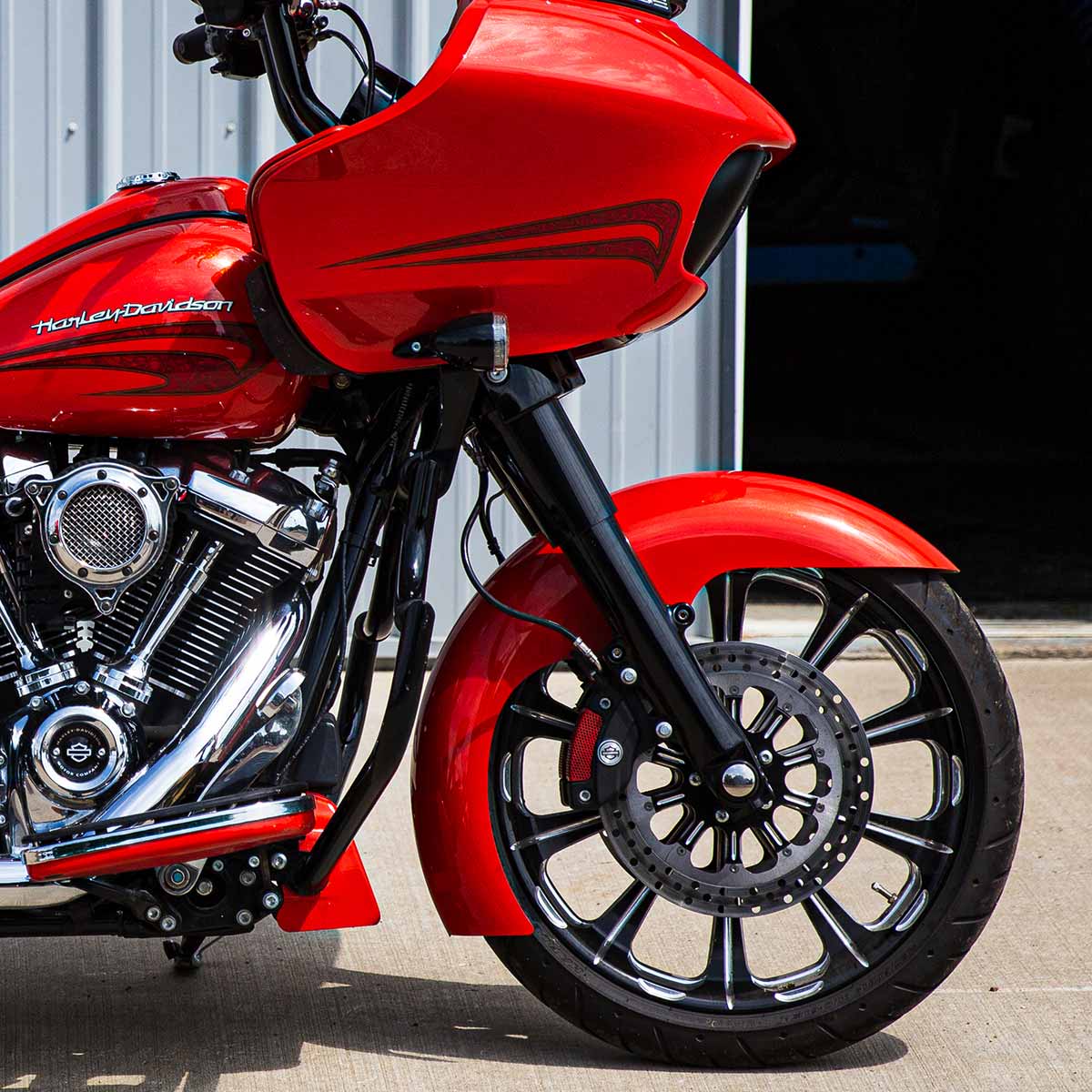
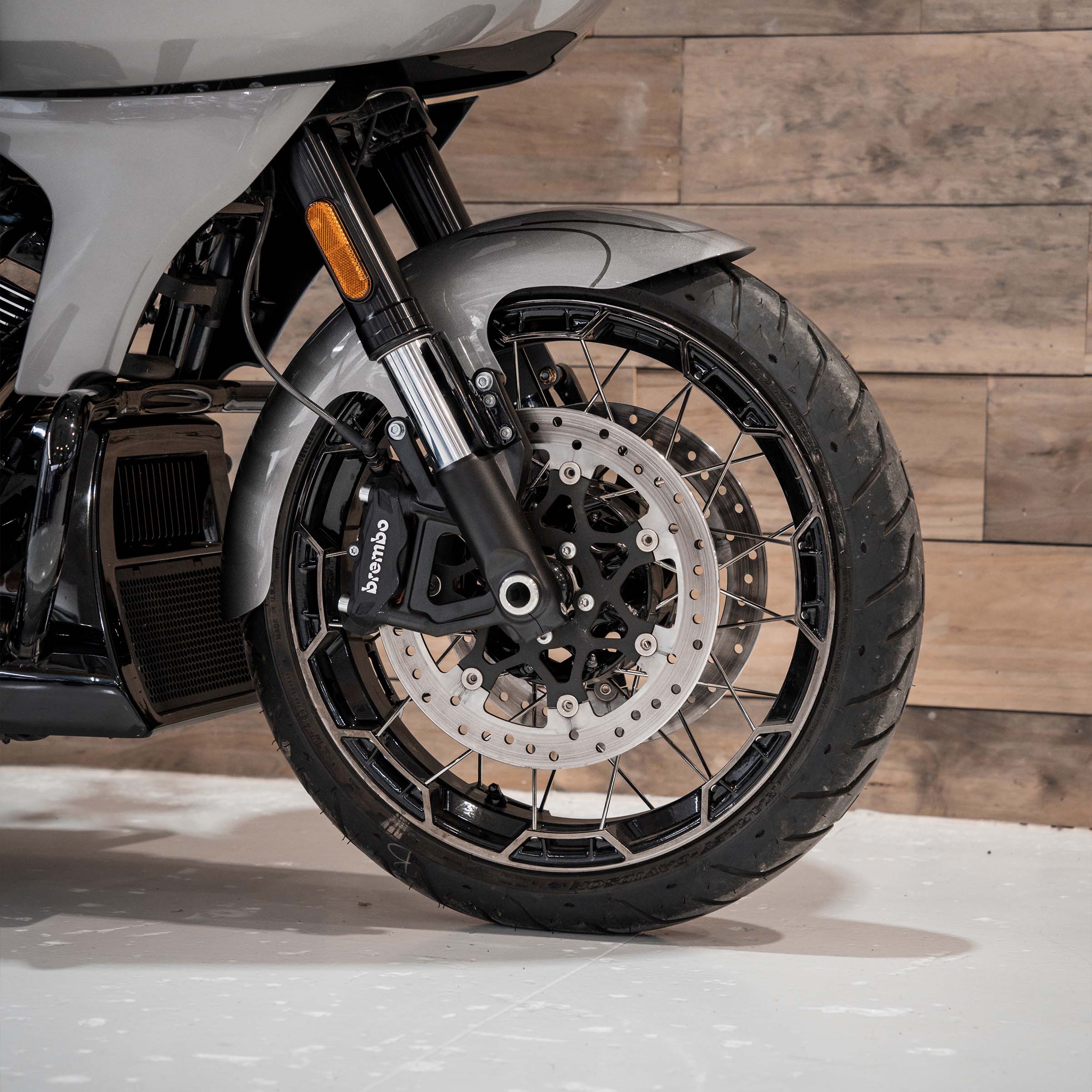
When riders think about upgrading or customizing their bike, the fender rarely tops the list. That is a mistake. A fender is not a decorative afterthought. It protects your front end from road debris, contributes structural rigidity to the front assembly on many touring models, and frames the entire look of your build. Choose the wrong material and you are compromising all three of those jobs at once.
At Klock Werks, every fender decision starts with the same principle we have applied since the Benchmark Bagger in 2003: build it right, not cheap. Steel fenders are better in every scenario where durability and longevity matter, which is every scenario a serious rider actually encounters. Custom builds, heavy-duty touring, gravel roads, rain, road salt, highway debris, and thousands of miles of engine vibration all tell the same story. Steel handles it. Plastic and fiberglass do not.

How Does Steel Compare to Plastic and Fiberglass for Motorcycle Fenders?
Many OEM manufacturers use ABS plastic or fiberglass to reduce production costs and shave a few pounds off the spec sheet. Those are factory priorities. They are not your priorities as a rider who has invested in a custom build and plans to put real miles on it.
Why Does Steel Outperform Plastic and Fiberglass on Impact Resistance?
Steel's primary advantage is ductility. When a plastic or fiberglass fender takes a hit from road debris or a low-speed impact, it cracks or shatters. The damage is sudden, structural, and often irreparable without a full replacement. When a steel fender takes the same hit, it may dent. The fender stays in one piece, your bike stays rideable, and the damage is addressable without starting over.
That distinction matters enormously when you are 200 miles from home on a two-lane highway and a rock the size of a golf ball comes off the truck in front of you.
What Happens to Plastic and Fiberglass Fenders Over Time?
Plastic and fiberglass degrade in ways that are not always visible until the damage is done. UV exposure makes plastic brittle over time, meaning a fender that survived last season may crack under an impact it would have absorbed without issue the year before. Fiberglass is vulnerable to the same UV degradation and adds the complication of resin that can react unpredictably with certain primers and paints. Neither material handles sustained vibration as well as steel, and neither ages as gracefully through real-world riding conditions.
A 14-gauge steel fender from Klock Werks does not get more brittle in the sun. It does not warp in heat. It does not develop stress fractures from vibration. What our Krew sees on the lift after years of hard use is steel that still looks and performs exactly as it should.
Why Does Steel Protect Your Custom Paint Investment Better?
Riders who have put money into custom paintwork understand this problem immediately. A cracked fiberglass or plastic fender is not just a structural issue. It is a paint issue. The crack travels through the fender and through the paint in a single event, and the repair path almost always leads to a full repaint or a full replacement of the panel.
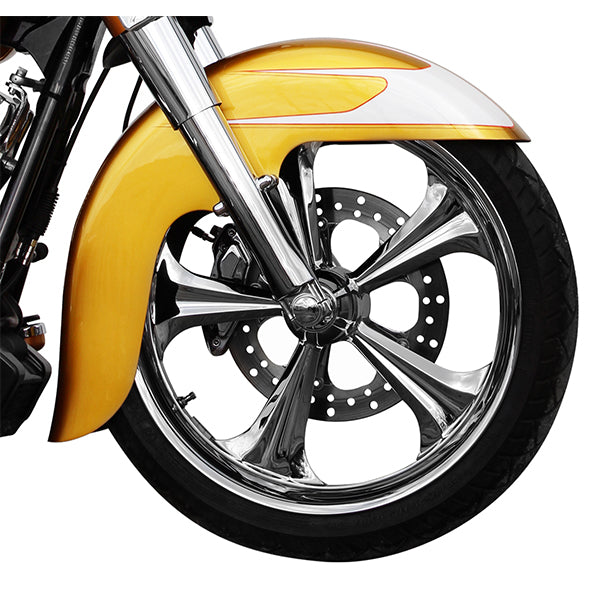
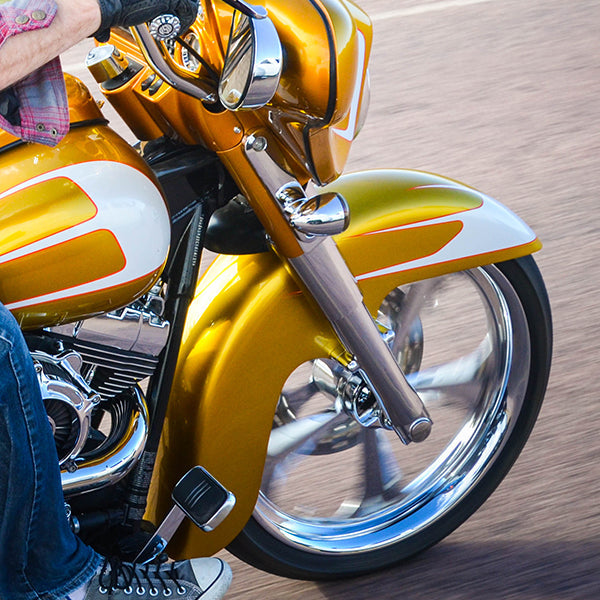
Steel fenders change that equation entirely. A dent in a steel fender can be hammered out, metal-finished, and repainted locally without disturbing the rest of the bike. In more serious cases, a steel fender can be welded, reshaped, and refinished to a standard that matches the surrounding bodywork. That is the practical advantage of real metal: it forgives, it responds to skilled hands, and it gets back on the road without requiring you to strip the bike down to bare frame.
Paint also adheres to steel more cleanly and predictably than to fiberglass or flexible plastic. There are no resin reactions to manage, no adhesion promoters required, and no concerns about paint flexing and cracking as the panel moves. Sand it down when you are ready for a new look, repaint, and roll out.

Does a Steel Fender Actually Affect How Your Motorcycle Handles?
On certain bikes, particularly older Harley-Davidson Touring models, the answer is yes in a meaningful way. A steel front fender installed with proper fitment adds structural rigidity to the front end assembly. That stiffness functions similarly to a fork brace, reducing flex in the front fork assembly under hard braking or cornering loads and contributing to more stable, predictable handling.
Fiberglass and plastic cannot provide this benefit without additional bracing hardware, which adds weight, complexity, and more potential failure points. With a properly fitted 14-gauge steel fender, the structural advantage is built into the part itself. There is nothing extra to install and nothing extra to maintain.
Why Is Steel the Superior Choice for Custom Fabrication and Modification?
If customizing is part of your plan, steel is the only material that gives you real freedom. It can be welded, stretched, cut, reshaped, and refined without special resins, bonding agents, or materials that require curing time and ideal shop conditions. A steel fender responds to a skilled fabricator the same way it responded to Dan Cheeseman and the Klock Werks Krew in those early years of hand-shaping Benchmark panels in the Mitchell shop: predictably, honestly, and without compromise.
That is also why Klock Werks invested in laser-cutting and deep-draw cold-stamp forming technology rather than cheaper production methods. Laser cutting ensures every blank is dimensionally accurate before it goes to the stamp. Cold-stamp forming with deep-draw tooling produces the consistently smooth, flawless surface that minimizes bodywork for the customer. The result is a fender that fits correctly out of the box and responds correctly when a fabricator needs to take it further.
What Makes Klock Werks Steel Fenders the Right Choice for Serious Riders?
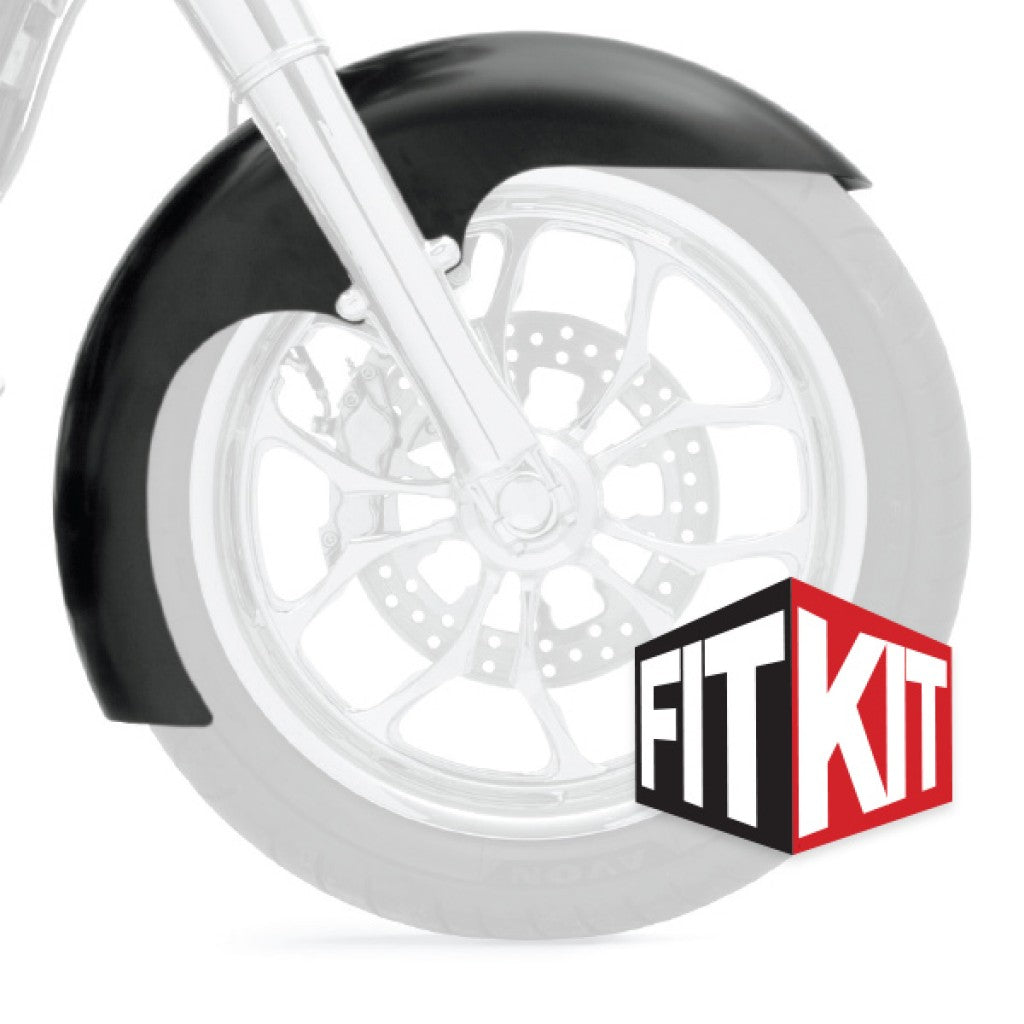
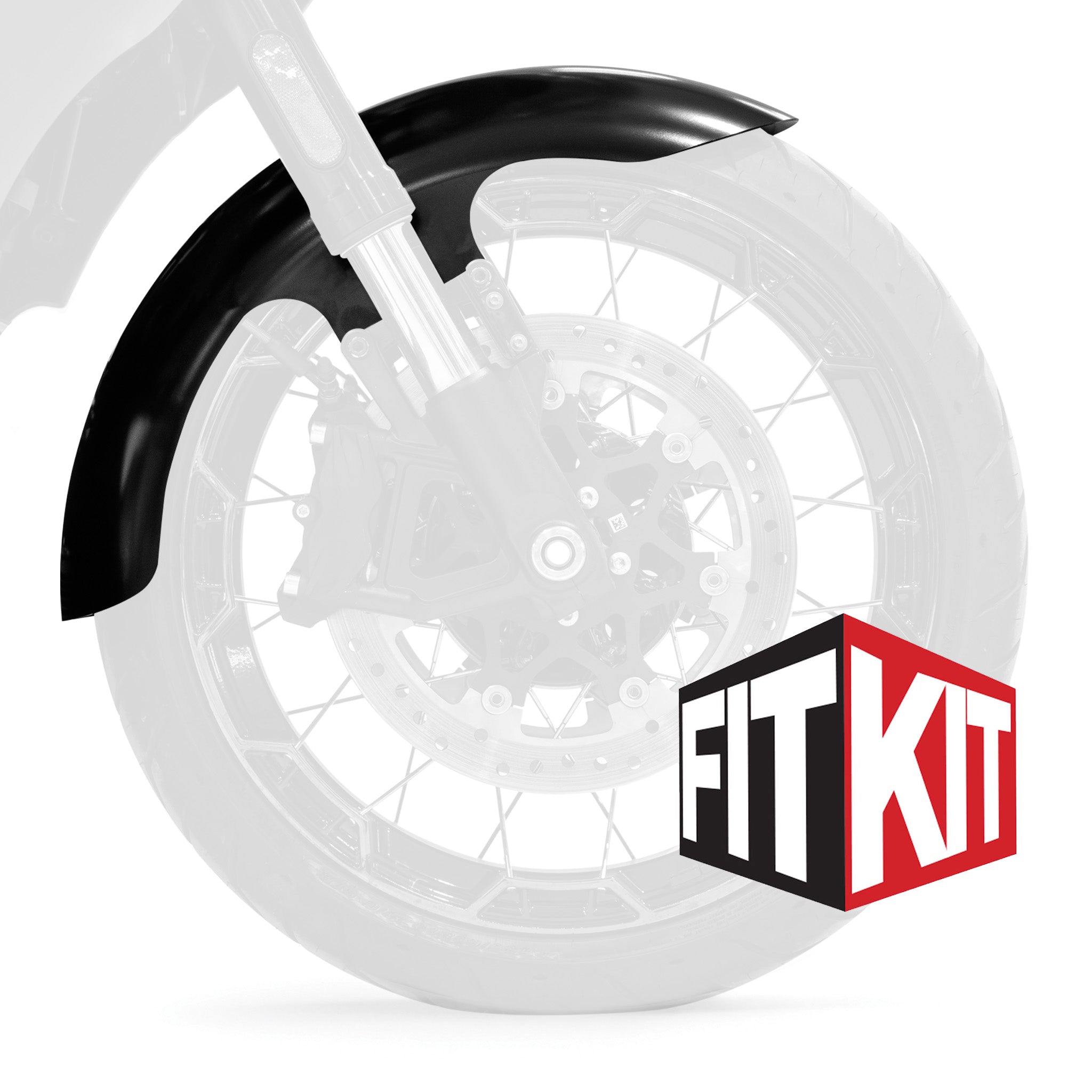
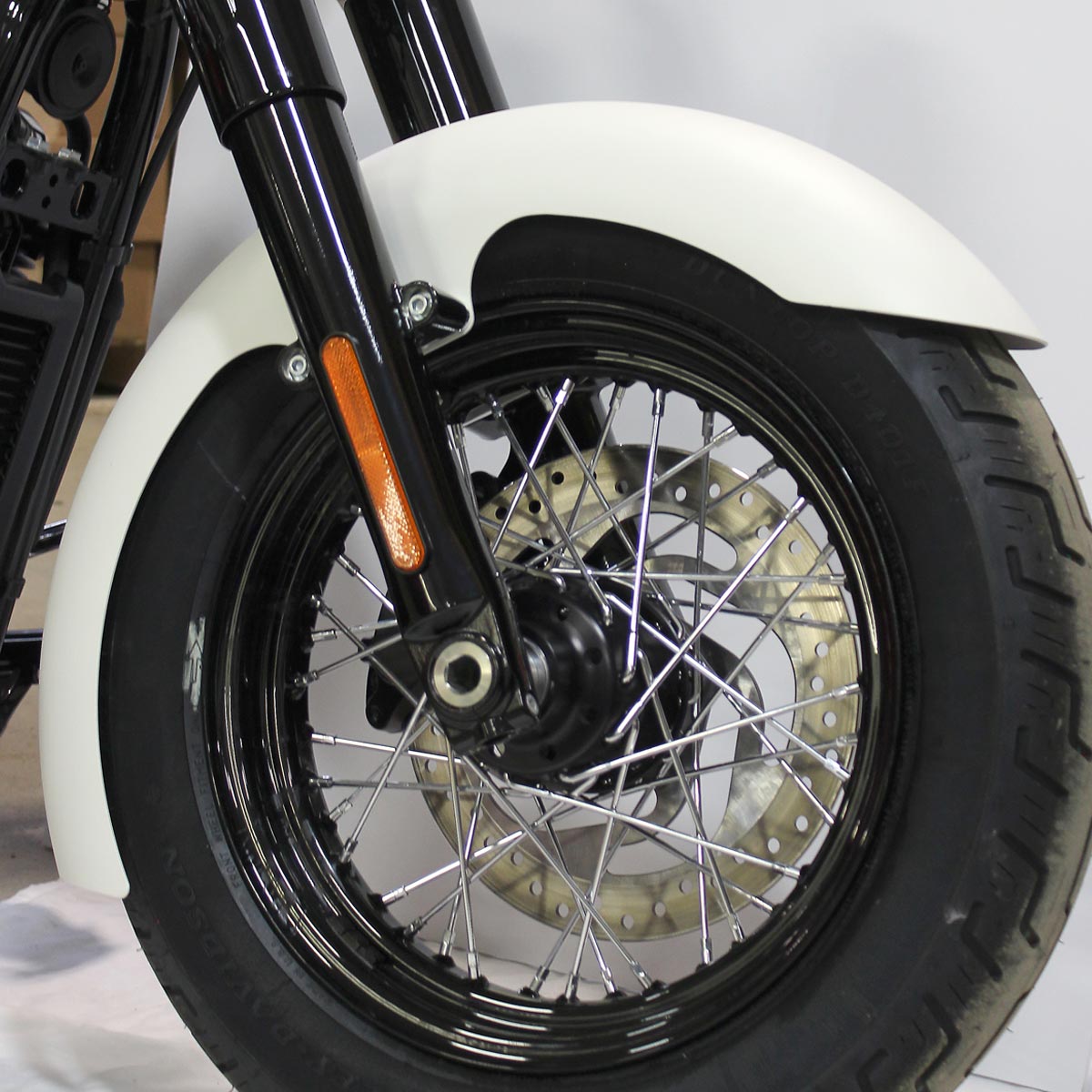
Every fender in the Klock Werks lineup is built from 14-gauge steel, laser-cut for dimensional accuracy, cold-stamp-formed using deep-draw tooling for a consistent surface finish, and then e-coated before it ships. The e-coat process applies an electrostatically bonded corrosion-resistant primer to every surface of the metal, including edges and recesses that conventional spray application cannot reach uniformly. That process is why these fenders hold up through years of road salt, rain, gravel, and UV exposure without the rust and corrosion that compromise lesser aftermarket parts.
Steel fenders carry slightly more weight than plastic or fiberglass alternatives. That is the one honest tradeoff. For riders who prioritize strength, repairability, structural contribution, and a finish that holds up through real miles, it is not a tradeoff that changes the decision. It is simply the cost of doing things right.
We make it quality. You make it Kustom.
It's your ride. You decide. 👊🏻

People Also Ask
Are steel motorcycle fenders worth the extra weight compared to plastic or fiberglass?
For riders who prioritize durability, repairability, and long-term performance, yes. The weight difference between a 14-gauge steel fender and a comparable plastic or fiberglass fender is real but modest, and the advantages steel provides in impact resistance, structural rigidity, and repairability far outweigh that difference for most riders. A steel fender that takes a hit stays rideable and repairable. A plastic or fiberglass fender that takes the same hit often requires full replacement, which costs more in time and money than the weight savings ever justified.
Can a dented steel motorcycle fender be repaired without full replacement?
Yes, and this is one of the most practical advantages of steel over composite materials. A dented steel fender can be hammered out, metal-finished, and repainted without disturbing the surrounding bodywork. In more severe cases, a steel fender can be welded and reshaped to a standard that matches the rest of the bike. Plastic and fiberglass fenders that crack or shatter typically require full panel replacement, which means stripping and repainting neighboring panels to match. Steel eliminates that problem entirely.
Why does Klock Werks use 14-gauge steel for motorcycle fenders instead of thinner material?
14-gauge steel is significantly thicker and more structurally rigid than the thinner steel or composite materials used in many aftermarket fenders. Combined with Klock Werks' deep-draw cold-stamp-forming process, 14-gauge steel produces a surface finish that is consistently smooth across the entire panel, minimizing the bodywork a rider needs to do before paint. Thinner materials flex, telegraph imperfections, and require more finishing work. 14-gauge steel delivers a panel that is ready to paint with minimal prep and built to handle real riding conditions without compromise.
Do steel fenders affect motorcycle handling or stability?
On certain touring models, particularly older Harley-Davidson Touring bikes, a properly fitted steel front fender adds measurable structural rigidity to the front end assembly. This acts similarly to a fork brace, reducing flex under braking and cornering loads and contributing to more stable, predictable handling. Plastic and fiberglass fenders cannot provide this benefit without additional bracing hardware. With a 14-gauge steel fender correctly installed, the structural contribution is built into the part itself with no additional components required.
What is e-coat and why does Klock Werks apply it to steel motorcycle fenders?
E-coat, short for electrostatic coating, is a corrosion-resistant primer applied through an electrochemical process that bonds the coating uniformly to every surface of the metal panel, including edges and recesses that conventional spray application cannot reach consistently. Klock Werks applies e-coat to every fender before it ships because it is the most effective available method for preventing the rust and corrosion that road salt, rain, and moisture cause over time. The e-coat layer also provides a clean, uniform base for paint adhesion, which is why Klock Werks fenders require minimal additional bodywork before they are ready for primer and paint.