Why Does “Dirty Air” Make a Kawasaki Voyager or Vaquero So Tiring to Ride?
Riders talk about horsepower, suspension, tires, and exhaust tone. But spend a full day in the saddle and another factor quickly becomes impossible to ignore: airflow.
At highway speed, air is not simply hitting your windshield and disappearing. It is moving around the fairing, over the shield, and into the low-pressure area behind it. When that air becomes turbulent, the result can be helmet movement, shaking, buffeting, noise, and fatigue or what riders often describe as the “bobblehead effect.”
If your helmet is constantly being pushed from side to side, your shoulders are fighting pressure, or you find yourself gripping the handlebars harder than you should, the problem may not be that you need a taller windshield.
Klock Werks founder Brian Klock won the Discovery Channel’s 2006 Biker Build-Off with the Road Glide now known as the WFB, or World’s Fastest Bagger. Less than three weeks later, the Klock Werks team took that bike to the Bonneville Salt Flats and set a national land speed record. During high-speed testing, the team encountered the aerodynamic problems that ultimately led to the patented Flare® Windshield. The design was developed through extensive testing and refinement, including testing at the A2 Wind Tunnel in Mooresville, North Carolina.

That experience is the foundation behind what Klock Werks calls air management expertise and it is why the Flare® is different from simply installing a taller piece of plastic.
If you're ready to see what the design can do on your bike, shop the full Flare® Windshield Collection.
What Makes the Flare® Windshield Different From a Stock Kawasaki Windshield?
A traditional windshield is primarily designed to move air away from the rider.
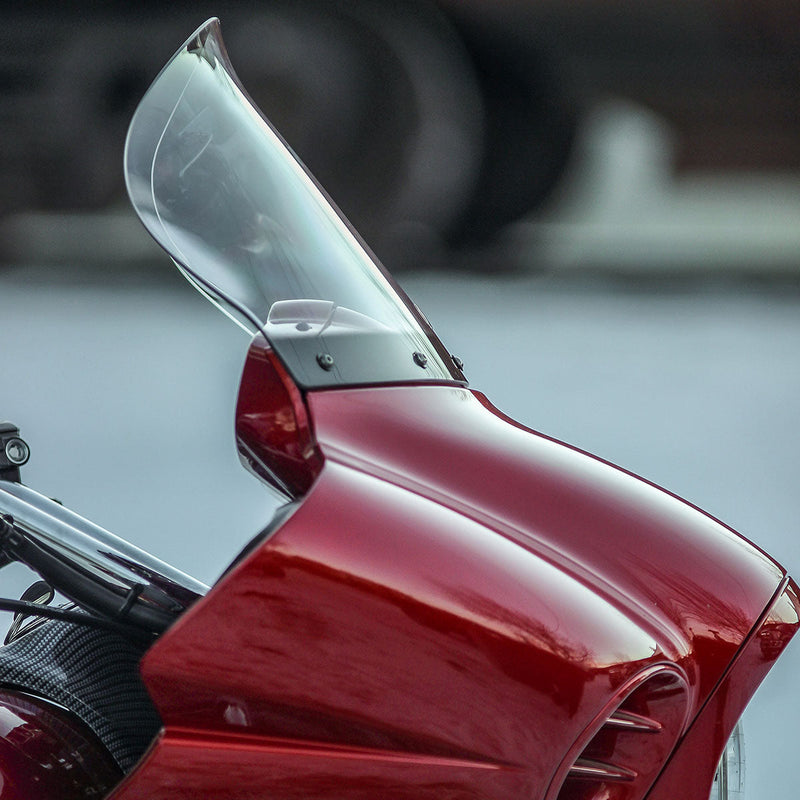
The Flare® takes that idea further and its patented shape is engineered to;control where that air goes.
Two key features make that happen:
What Does the “Flip” Do?
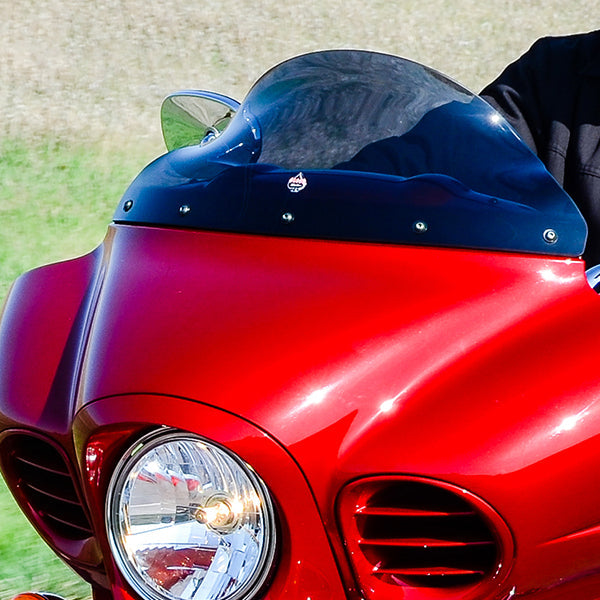
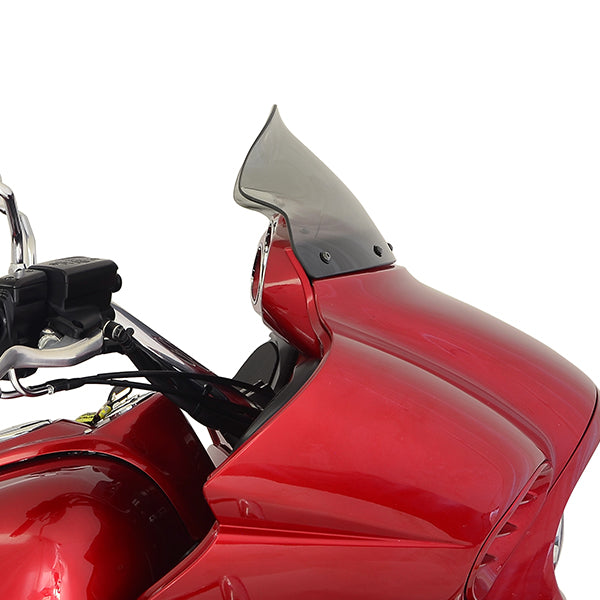
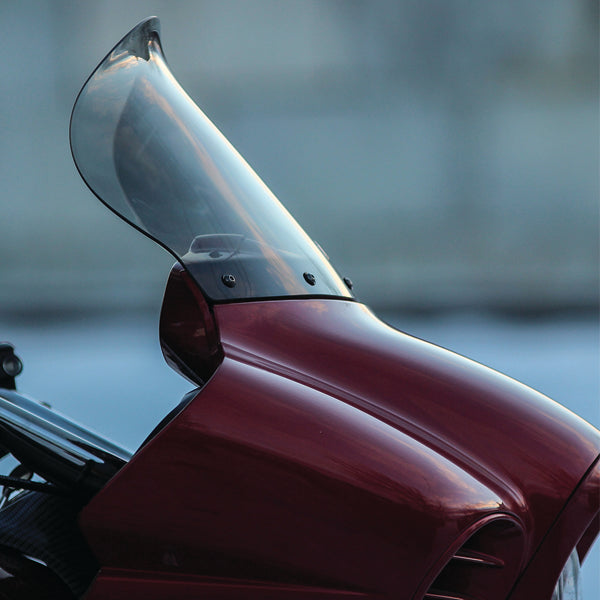
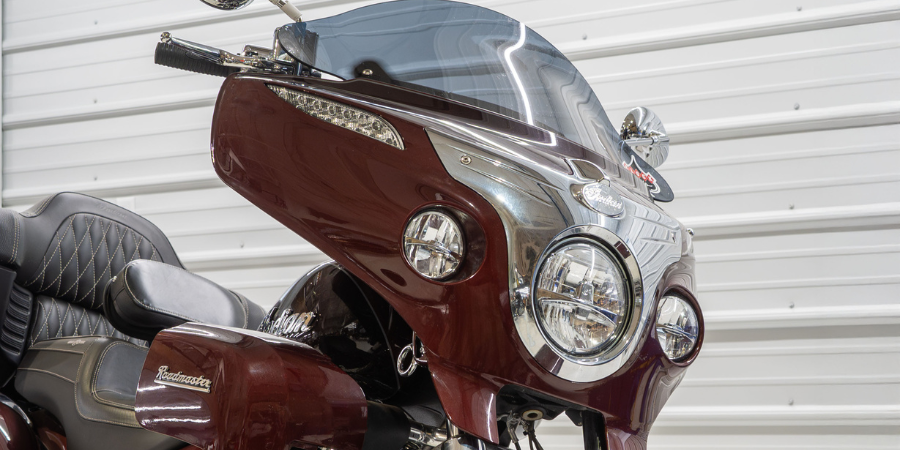
The upper portion of the Flare® features a raised “flip.” Its job is to kick airflow up and back, helping create cleaner, less turbulent air for the rider and passenger.
Rather than simply sending air straight upward, the shape changes the trajectory of the airflow as it leaves the windshield. The goal isn't to create a giant wall in front of you. The goal is to move the air in a more controlled way so you can sit in a calmer pocket of air.
What Do the “Hips” Do?
The hips help reroute airflow around the sides of the motorcycle while creating aerodynamic downforce that can contribute to front-end stability. Klock Werks describes this as part of the difference between the Flare® and a stock shield.
The key concept behind the Flare® is to;manage airflow instead of simply deflecting it.

A Taller Windshield Isn't Always Better
This is one of the biggest misconceptions when choosing a motorcycle windshield.
It is easy to assume that if a 9-inch windshield provides a certain amount of protection, a 12-inch windshield must automatically provide more and therefore be better. Not necessarily.
Windshield height changes the point where the airflow separates from the shield. Changing that point can change the air pressure and turbulence reaching the rider. That's why the correct windshield height depends on more than the motorcycle. Things like your height, seat position, torso length, riding posture, handlebars, and the way you naturally sit on your Kawasaki can all influence the result.
The right Flare® should allow you to look comfortably over the windshield rather than through giving;you a clear sight line for changing weather, bugs, road spray, nighttime riding, and everything else that comes with putting serious miles on a motorcycle.
How Do You Choose the Right Flare® Height for a Kawasaki Voyager or Vaquero?
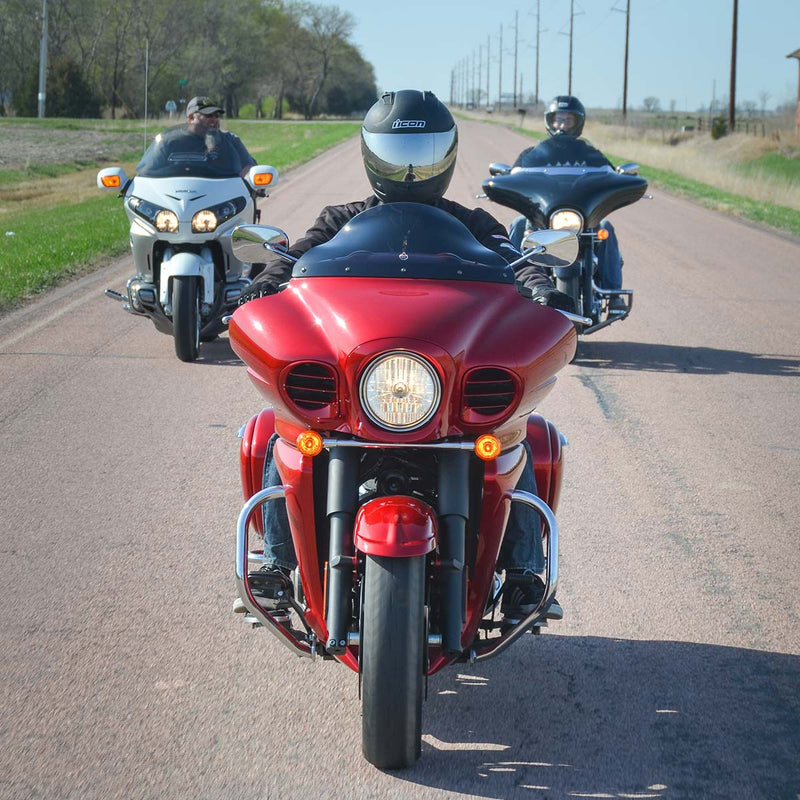
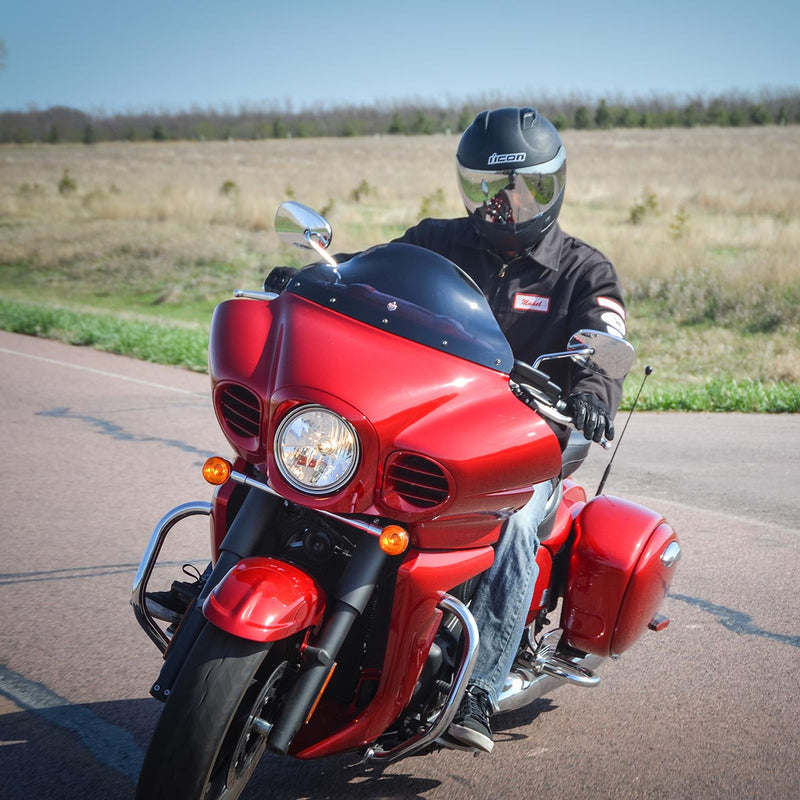
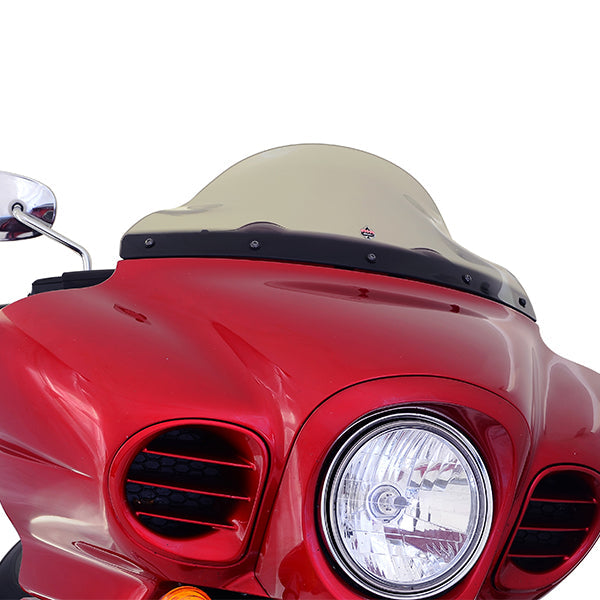
Klock Werks currently offers the Kawasaki Vaquero and Voyager Flare® in 9-inch and 12-inch heights. The current product page lists fitment for the 2011–2026 Kawasaki Vaquero and 2009–2026 Kawasaki Voyager.
Current configurations include:
|
Size |
Description |
Part # |
Klock Werks Part # |
|
9" |
Tint |
2312-0225 |
KWW-06-0023 |
|
9" |
Dark Smoke |
2312-0226 |
KWW-06-0024 |
|
12" |
Clear |
2312-0346 |
KWW-06-0046 |
|
12" |
Tint |
2312-0345 |
KWW-06-0047 |
So which one should you choose?
The 9-Inch Flare® Better for a Sportier Ride
The 9-inch option gives the Kawasaki a lower, more aggressive profile while still using the Flare® shape to manage airflow.
For riders who prioritize a sportier stance, ride solo frequently, or want to maintain more of the motorcycle's visual attitude, the 9-inch can be an excellent starting point.
The important thing is that the lower profile doesn't mean the windshield has simply been shortened.
It retains the Flare® design features responsible for managing the airflow.
The 12-Inch Flare® Better for Long-Distance Touring
If maximum wind protection is higher on your priority list, the 12-inch configuration provides additional coverage while retaining the Flare® profile.
For riders who spend long days on the highway, ride in varying weather, or regularly carry a passenger, the additional height may make sense.
But don't choose a height solely because you assume taller equals better.
Measure first.
How Do You Measure for a Flare® Windshield?
The easiest way to choose your height is to measure from the motorcycle while sitting in your actual riding position.
For our full fit-up guide, read here!
Step 1: Get in Your Natural Riding Position
Put both hands on the handlebars, relax your shoulders, and look forward.
If you normally lean back slightly on long rides, sit that way.
Step 2: Establish Your Sight Line
Your eyes should naturally look over the top of the windshield.
You don't want to spend every mile looking through the windshield, especially if you ride in rain, darkness, or conditions where road grime and bugs become part of the equation.
Step 3: Have a Buddy Measure
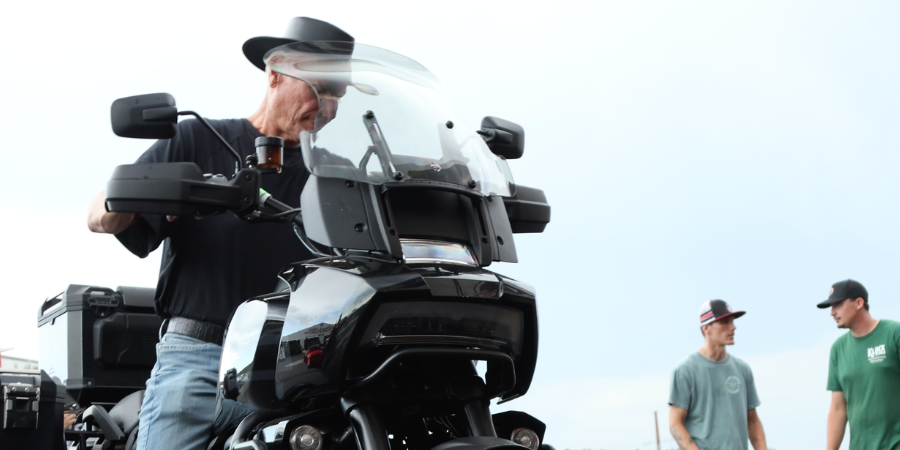
Have someone hold a ruler or tape measure vertically from the bottom edge of the windshield area. Then use a second ruler or tape to establish your eye-line measurement. Make sure to keep the measurement level and use your normal riding posture.
Step 4: Choose a Height Below Your Line of Sight
The goal is to select a Flare® that sits comfortably below your direct line of sight without dropping so low that it sacrifices the protection you actually want.
Klock Werks has a step-by-step video showing the process so you can measure before ordering.
Watch the Flare® Windshield Measuring Guide on YouTube
What Will You Notice After Installing a Flare® on a Kawasaki Voyager or Vaquero?
The biggest difference may not be something you can see.
It may be what you don't feel.
Less Helmet Movement
When turbulent air is reduced, your helmet isn't constantly being knocked around by competing pockets of pressure.
That can make highway riding feel dramatically less tiring.
Less Rider Fatigue
Wind pressure doesn't just affect your head. Your chest, shoulders, arms, and hands can all spend hours resisting the force of the air. When the airflow is better managed, you can settle into the motorcycle instead of constantly fighting it.
A Better Passenger Experience
The Kawasaki Voyager is built for two-up touring, which means airflow isn't only a rider concern. A windshield that produces turbulent air can send that turbulence directly into the passenger's helmet.
The Flare® is designed to kick airflow up and back, helping create cleaner air for both rider and passenger. Less helmet slap means fewer shouted conversations and that's a win for everybody.
Improved High-Speed Stability
The Flare® hips are engineered to redirect airflow and create downforce at the front of the motorcycle. That aerodynamic effect is part of the reason Klock Werks developed the design in the first place.

What Is the Flare® Windshield Made From?
The current Klock Werks Flare® collection uses hard-coated polycarbonatefor its standard Flare® Windshields, providing strength and durability for the demands of motorcycle use. Polycarbonate is particularly well suited to motorcycle windshields because impact resistance matters. Bugs happen. Road debris happens. Weather happens. And the windshield is sitting directly in the line of fire.
The hard coating is part of the equation, but proper care matters too. Klock Werks recommends Shine Werks or mild soapy water with a clean microfiber towel. Petroleum-based, ammonia-based, and aerosol glass cleaners are not recommended because improper chemicals can damage the windshield material.
Why Does Klock Werks Have So Much Experience With Air Management?
The Flare® wasn't invented for looks but was born from a problem encountered while going fast.
After the 2006 Biker Build-Off win, Brian Klock and the Klock Werks team took the WFB to Bonneville to chase land speed records. That experience exposed the relationship between airflow, lift, and motorcycle stability at speed. The resulting development work became the foundation for the Flare® Windshield.
That race-tested mentality still drives the company from its Mitchell, South Dakota headquarters.
Brian Klock, known throughout the motorcycle industry as the “King of the Baggers,” is also an inductee in the Sturgis Motorcycle Hall of Fame. Klock Werks has since taken that same design-first approach into collaborations with Indian Motorcycle and Jack Daniel's, including limited-edition Indian builds and custom motorcycles designed and built in the Mitchell shop.
Is the Flare® Windshield a Good Upgrade for Your Kawasaki?
If your Kawasaki Voyager or Vaquero feels great everywhere except when the wind starts beating you up at highway speed, changing the windshield may be one of the most noticeable upgrades you can make.
For the Kawasaki Voyager and Vaquero, the Klock Werks Flare® combines:
- Patented airflow-management design
- Signature “flip” for cleaner airflow
- “Hips” designed to redirect airflow and add aerodynamic downforce
- 9-inch and 12-inch height options
- Multiple tint options
- Hard-coated polycarbonate construction for standard Flare® Windshields
- Made-in-the-USA production
- Fitment-specific design for Kawasaki Vaquero and Voyager models
Shop the Kawasaki Vaquero & Voyager Flare® Windshield
People Also Ask: Kawasaki Voyager and Vaquero Flare® Windshield
Q: What years does the Klock Werks Flare® Windshield fit the Kawasaki Voyager?
A: The current Klock Werks product listing specifies fitment for 2009–2026 Kawasaki Voyager models. Always verify the exact model year and fitment before ordering.
Q: What years does the Flare® Windshield fit the Kawasaki Vaquero?
A: The current listing specifies fitment for 2011–2026 Kawasaki Vaquero models. Klock Werks recommends confirming your exact motorcycle and fairing configuration before purchasing.
Q: Is a taller motorcycle windshield better for reducing buffeting?
A: Not necessarily. Windshield height changes where airflow separates from the shield, but a taller windshield can still create turbulent air if the airflow isn't properly managed. The Flare® uses its patented flip and hips to redirect airflow rather than relying on height alone.
Q: What is the best Flare® Windshield height for a Kawasaki Voyager or Vaquero?
A: Klock Werks currently offers 9-inch and 12-inch options. The best height depends on your body position, seat height, riding posture, and preferred level of wind protection. In most cases, Klock Werks recommends choosing a height that allows you to comfortably look over the windshield while sitting in your normal riding position.
Q: Does the Flare® Windshield reduce passenger buffeting?
A: The Flare® is designed to redirect airflow up and back, creating cleaner air for both the rider and passenger. This makes the design particularly relevant to two-up touring on the Kawasaki Voyager, where turbulent airflow can affect both helmets.